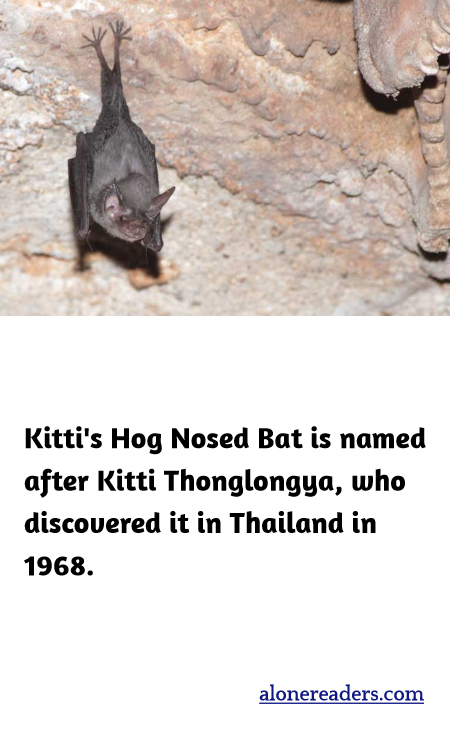
Kitti's Hog-Nosed Bat, scientifically known as Craseonycteris thonglongyai, holds the distinction of being the world's smallest bat and one of the smallest mammal species by skull size. This diminutive creature, also commonly referred to as the bumblebee bat due to its minuscule size, was first identified in 1974 by Kitti Thonglongya, a Thai zoologist whose discovery posthumously named the species in his honor after his unexpected death in 1974.
The bat is primarily found in limestone caves along rivers in Western Thailand and Southeast Myanmar, where it resides in colonies that can number from a few dozen up to a few hundred individuals. Its distinctive hog-like snout and reddish-brown or grey coat distinguish it from other bat species. Despite its small size, typically weighing less than two grams and measuring around 2.5 to 3.3 centimeters in length, it is equipped for survival with echolocation abilities to navigate and hunt for insects during dusk.
The existence of Kitti's Hog-Nosed Bat is threatened by habitat destruction, primarily due to mining and tourism. As these activities degrade and reduce access to the caves which serve as its natural habitat, the bat's population is at risk. Conservation efforts are crucial to mitigate these impacts and ensure the survival of this unique species. Currently, it is listed as Vulnerable by the International Union for Conservation of Nature (IUCN), indicating it is at a high risk of endangerment in the wild.
Efforts to protect Kitti's Hog-Nosed Bat include regulating mining activities near its known habitats, controlling tourism activities in critical cave systems, and conducting further research to better understand its ecological needs and behavior. Public awareness and education about the species and its plight are also essential to cultivate support for conservation measures. The ongoing challenge is to balance human economic activities with the preservation of natural habitats that species like the bumblebee bat rely upon for survival, ensuring that this unique creature does not vanish from our world.
