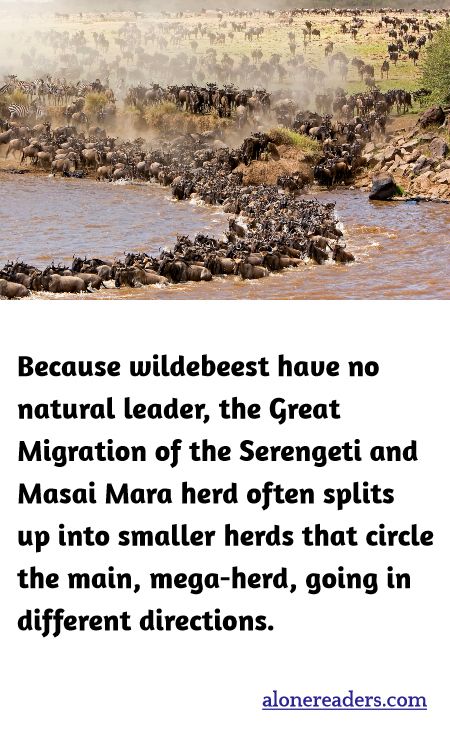
Every year, the vast plains of the Serengeti and the rolling landscapes of the Masai Mara become the stage for one of the world's most awe-inspiring spectacles - the Great Migration. Over two million wildebeest, along with hundreds of thousands of zebras and gazelles, traverse these lands in a relentless pursuit of fresh grazing grounds and water sources. This grand movement is driven not by any single leader but by a collective instinctual response to environmental cues, making it a unique phenomenon in the animal kingdom.
The migration is an epic journey fraught with peril, including treacherous river crossings where predators lurk in the shadows. The absence of a natural leader in the wildebeest herds adds an element of chaos and unpredictability to their travel patterns. As the main herd moves, it often fractures into smaller groups that may temporarily venture in different directions. These sub-herds whirl around the principal group, creating a dynamic flux within the migration pattern. This dispersion serves as a survival tactic, reducing the risk for individual animals as they spread out across the landscape, making it harder for predators to target them.
Despite appearing chaotic, this splitting and rejoining of herds represent a sophisticated survival strategy. It allows the wildebeest to maximize their use of available resources. As they move across different terrains, their paths are influenced by the rains and the growth of new grass. This dictates not only the direction but also the pace of the migration. The smaller groups may explore potential routes and grazing areas before inevitably rejoining the main herd, thus ensuring that the majority remains on the optimal path for survival and sustenance.
The pattern in which these herds split and reform reveals much about the ecological and biological interdependencies of the Mara-Serengeti ecosystem. It highlights the complex interactions between climate, geography, and animal behavior. Moreover, the Great Migration is not just a vital event for the wildebeest and other migratory animals but also plays a crucial role in sustaining the ecological balance of the savannah. It influences the growth of vegetation and the populations of predators, thereby maintaining the health and stability of the ecosystem.
The Great Migration is a testament to the power of natural processes and the adaptability of wildlife. In the absence of a leader, the wildebeest rely on the collective memory and instincts of the herd, demonstrating the remarkable ability of nature to orchestrate one of the most spectacular animal movements on the planet. This event not only fascinates wildlife enthusiasts and researchers but also offers profound lessons on leadership, organization, and survival in the natural world.
