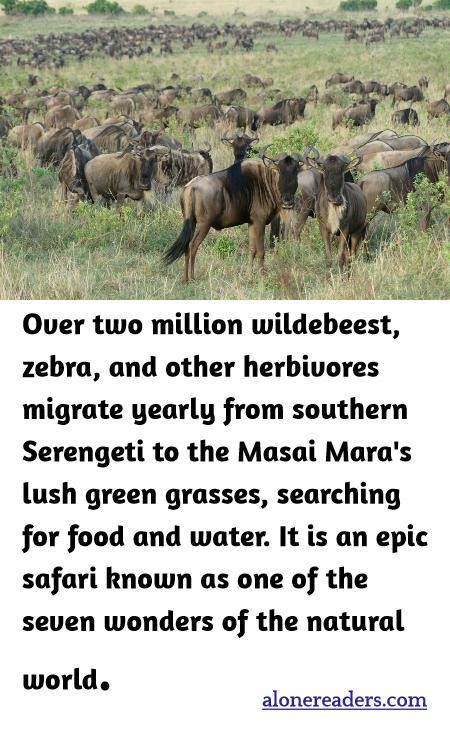
Each year, over two million wildebeest, zebra, and other herbivores embark on an extraordinary journey across the plains of East Africa, in what is often described as one of the most spectacular natural events on the planet. This great migration, a magnificent display of wildlife movement, stretches from the southern plains of the Serengeti in Tanzania to the rich, green grasslands of the Masai Mara in Kenya. The primary drivers of this massive migration are the basic needs for water and fresh grazing lands, following the seasonal rains.
The journey is fraught with peril. Not only do these animals travel long distances, but they must also cross treacherous rivers and evade predators like lions, cheetahs, crocodiles, and hyenas. The river crossings are particularly dramatic, often featured in documentaries: massive herds gather at the banks, nervously sensing the danger in the water below. When one finally takes the leap, thousands follow, in a chaotic battle against both the current and the crocodiles waiting for an opportunity to strike.
This cyclical event provides a vital cornerstone for the region's biodiversity. It affects the lives of all species in the area, creating a dynamic ecological ripple effect that sustains the grasslands. For instance, the droppings of the migratory herds fertilize the soil, which in turn benefits the smaller herbivores and the predators that depend on them. Furthermore, the wildebeests themselves are a crucial food source for a variety of predators, ensuring a balance within the ecosystem.
For humans, the migration has become a powerful draw for tourism, contributing significantly to the local economies of Tanzania and Kenya. Tourists from around the world flock to the region, hoping to witness this awe-inspiring event. Safaris geared towards viewing the migration offer a closer look at this natural spectacle and the dramatic interplay of life and death that characterizes it.
The Great Migration underscores the complex interdependence between the environment and its inhabitants, reminding us of the profound impacts of natural phenomena on the biological and economic landscapes. It also brings to light the need for concerted conservation efforts to preserve these unique behaviors and the ecosystems that support them, as they face threats from human encroachment and climate change. This awe-inspiring event not only attracts global attention but also emphasizes the intricate beauty of our natural world and the importance of its conservation for future generations.
