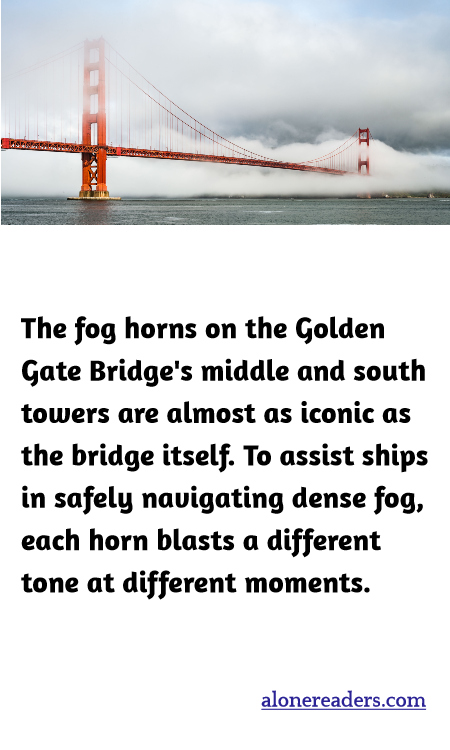
The Golden Gate Bridge, a marvel of engineering and a symbol of San Francisco, is not only famous for its striking appearance but also for its less visible yet vitally important safety features—one of which includes its fog horns. These horns, located on the bridge's middle and south towers, play a critical role in maritime safety, especially given the dense fog that frequently blankets the bay.
Each of the fog horns emits a distinctive tone, and they sound at different intervals, a design intended to provide specific navigational information to vessels. The horn on the south tower produces a lower tone and blasts every 20 seconds, while the middle tower emits a higher tone every 10 seconds. This difference helps sailors recognize their location relative to the bridge without seeing it, crucial during thick fog or at night.
The operation of these horns is automated, triggered by sensors that detect the fog's density, ensuring they sound only when necessary. This system helps to minimize noise pollution, maintaining the auditory landscape of the area as undisturbed as possible during clearer conditions.
Despite their utilitarian purpose, the fog horns have become an integral part of the identity of the Golden Gate Bridge, adding to the sensory tapestry of the San Francisco Bay area with their deep, mournful sounds. The horns enhance the mystique and atmospheric quality of the bridge, reminding us of the complex interplay between human innovation and the natural environment.
In addition to serving as crucial navigational aids, the fog horns stand as a testament to the thoughtful engineering that went into the design of the Golden Gate Bridge, ensuring that it not only serves as a transport link but also as a guardian of public safety in one of the most challenging maritime environments in the United States. Thus, these horns echo more than sound; they echo the ingenuity and foresight that have stood the test of time since the bridge opened in 1937.
