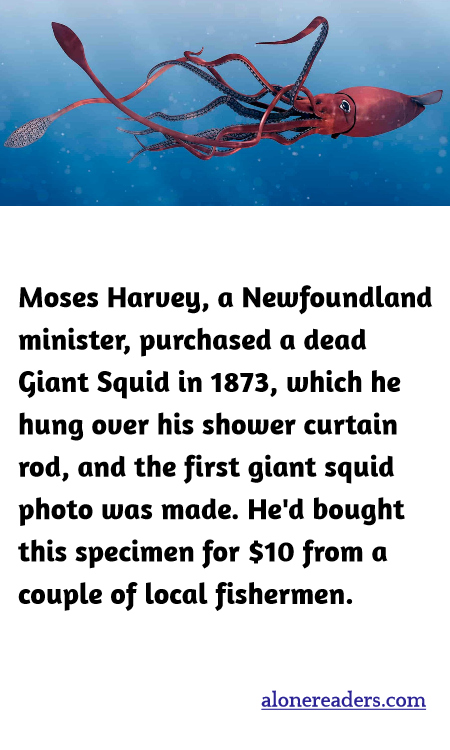
In the quaint coastal environs of Newfoundland in 1873, a remarkable contribution to marine biology was made by an unlikely enthusiast, Reverend Moses Harvey. His passion for the mysterious creatures of the sea led to a groundbreaking event—the first photograph of a giant squid, an elusive Titan of the depths. Harvey, a minister by profession, was always fascinated by the natural wonders surrounding his home, particularly the marine life. His opportunity for a closer investigation came unexpectedly when local fishermen stumbled upon an enormous, peculiar creature tangled in their nets.
The creature in question was a giant squid, known scientifically as Architeuthis dux, largely considered a stuff of maritime lore and sailor’s tales at the time. These fishermen, familiar with Harvey's interest in such oddities, offered him the deceased squid for a modest sum of $10—a trivial price for a creature that would ignite scientific curiosity worldwide. Seizing the opportunity, Harvey acquired the specimen, aware of its significance.
Upon getting the giant squid, Harvey faced the practical problem of preserving and examining such a large specimen. Ingeniously, he decided to hang the squid over the shower curtain rod in his home. This perhaps unconventional method allowed Harvey to maintain the squid in a somewhat extended position, ideal for observation and documentation. It was here that Harvey, with the help of a local photographer, managed to capture the first known photograph of a giant squid. This photograph was instrumental in providing the scientific community, and the world at large, with concrete evidence of the giant squid's existence and morphology.
The significance of Harvey's contribution cannot be overstressed. Before his documentation, the giant squid had been a creature relegated to myth and anecdote. Skepticism about its existence was rife among scientists; many believed it to be no more than a fantastical creation of seafarer superstition. Harvey's photograph not only validated countless stories told by sailors over the centuries but also opened new avenues in marine biology research.
Furthermore, the relatively primitive technology of the era makes Harvey's accomplishment all the more impressive. Without the benefits of modern photographic equipment or preservation techniques, capturing such a clear and useful image was a noteworthy achievement.
Harvey's work with the giant squid paved the way for future studies and helped to inspire a deeper investigation into the world's oceans. It shifted the giant squid from the shadowy realms of sea serpents and krakens to a subject of legitimate scientific inquiry. Today, the giant squid remains a symbol of the vast unknown of the ocean depths, but also a reminder of the curiosity and dogged determination of individuals like Moses Harvey, who help to bring such mysteries into the light.
