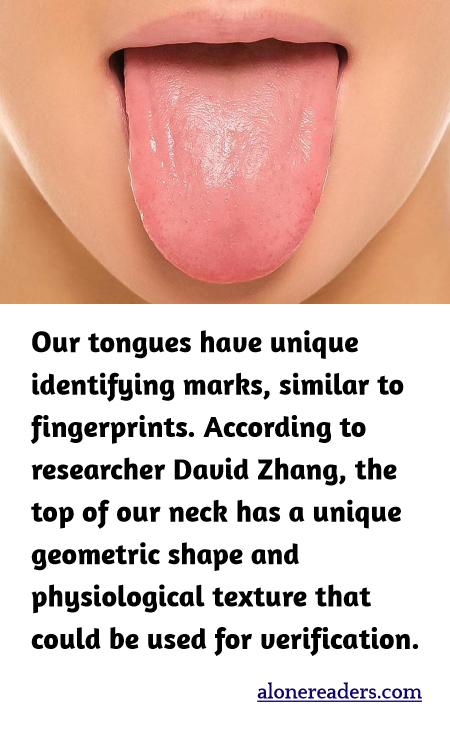
The human tongue, often overlooked in discussions about biometric security, possesses unique qualities that exemplify its potential as a tool for identification. Much like fingerprints, each person's tongue has distinctive features including its shape, size, texture, and even the pattern of taste buds. These individualistic characteristics position the tongue as a viable candidate for biometric authentication.
Research conducted by experts like David Zhang has shed light on how the tongue's intrinsic properties could be harnessed for verification processes. Unlike fingerprints, which can be altered through abrasions or wear, the tongue is generally protected inside the mouth from external alterations and maintains its uniqueness throughout a person’s life. Additionally, it is nearly impossible to forge or replicate given its internal location and moist texture.
The concept of using the tongue's topography and physiological texture for identification involves capturing a detailed image of the tongue's surface. Advanced imaging techniques could analyze various aspects such as the geometric shape, surface ridges, and texture patterns. This biometric system would require individuals to stick out their tongue for a quick scan, making the process both non-invasive and swift.
Implementing tongue-based identification could provide a reliable security system for a variety of applications. From unlocking personal devices to accessing high-security buildings, the uses are extensive. Moreover, it could serve as a beneficial alternative for individuals who have difficulties with other biometric systems, such as those unable to use fingerprint scanners due to worn-out ridges on their fingers.
Despite its potential, the adoption of tongue-based biometric systems faces several challenges. A primary concern is the public's acceptance of such a method, as it diverges significantly from more familiar techniques like iris or fingerprint scanning. In addition, maintaining hygiene and ensuring accuracy in diverse conditions where the tongue's appearance might temporarily change, such as dehydration or illness, are practical issues that need addressing.
Nevertheless, as technology advances and the demand for secure yet convenient authentication methods increases, research into using the tongue's unique properties for security purposes will likely expand. This novel biometric could soon become a standard part of our security toolkit, offering a unique blend of safety, efficiency, and cutting-edge technology.
