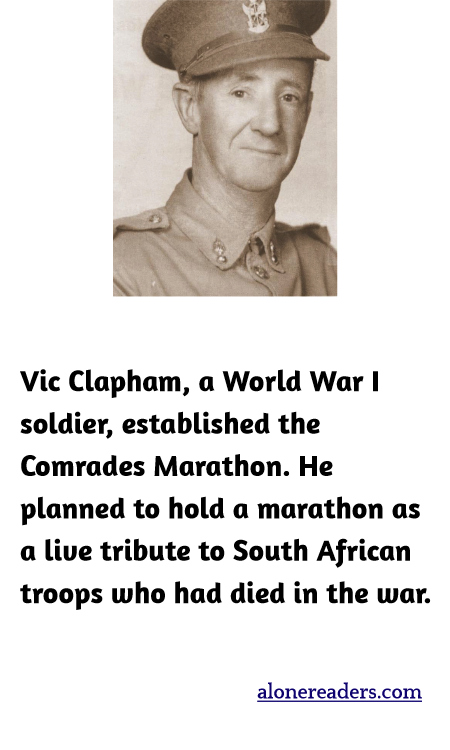
In 1921, Vic Clapham, a veteran of World War I, founded the Comrades Marathon, an ultramarathon race that is held annually in South Africa. This event was conceived as a living memorial to the South African soldiers who perished during the war. Clapham, who served with the 8th South African Infantry, experienced firsthand the hardships and camaraderie among soldiers. Drawing from these experiences, he sought to commemorate their spirit through a challenge that embodied both the physical endurance and deep fellowship he felt was critical to surviving the war.
The idea was to create a race that was as enduring as the memory of the soldiers it honored. Spanning approximately 90 kilometers between the cities of Pietermaritzburg and Durban, the race mirrors the demands and endurance required in the military. The course layout deliberately includes the strenuous ascents and descents of the region's hills, a testament to the perseverance and resilience that soldiers like those Clapham served with exhibited.
Initially, the race attracted only 34 runners, but its significance and challenge have seen it grow significantly over the years. Today, the Comrades Marathon is one of the world’s most renowned ultramarathons, drawing thousands of runners from across the globe. Participants come not only to challenge their physical and mental limits but also to be part of an event deeply rooted in historical significance and shared human values.
The Comrades Marathon is more than just a race; it's a pilgrimage that celebrates the unyielding human spirit. Each year, the event transcends the realm of sports, touching on deep emotional and personal chords among both participants and spectators. It stands as a powerful tribute to those who fought and the enduring bonds forged amidst the trials of war, reflecting Clapham’s original vision of remembrance and tribute through shared struggle and perseverance.
