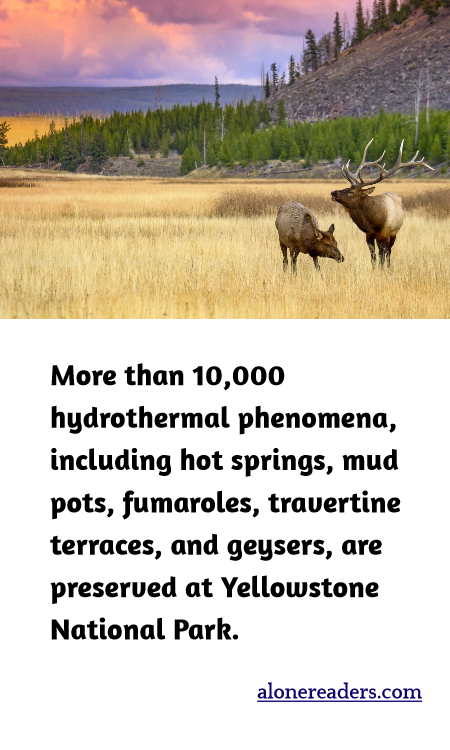
Yellowstone National Park is a vast natural wonderland and one of the most geothermally active locations on Earth. With over 10,000 hydrothermal features, the park offers a spectacular and diverse array of phenomena that includes hot springs, mud pots, fumaroles, travertine terraces, and geysers. Each of these features contributes to the unique ecological and geological landscape that attracts millions of visitors each year.
Hot springs are perhaps the most famous of Yellowstone’s hydrothermal attractions. These pools are formed when water heated by magma from the Earth's interior rises to the surface and collects in natural pools. Rich in minerals and often brilliantly colored by thermophilic bacteria, hot springs like the Grand Prismatic Spring showcase a dazzling array of blues, greens, and yellows.
Mud pots offer a different kind of spectacle. These are hot springs with limited water supply, causing the heat to convert the surrounding rock into clay. As gases escape through the wet clay, the surface bubbles and burps, creating a constantly changing landscape of mud. The mud pots in areas like the Fountain Paint Pot are a testament to the dynamic nature of the Earth’s geothermal processes.
Less visually dramatic but equally fascinating are fumaroles, or steam vents, where groundwater is so hot that it evaporates before reaching the surface, sending up jets of steam and gases through cracks in the Earth’s surface. These too contribute to the ethereal atmosphere of areas such as the Norris Geyser Basin.
Travertine terraces, such as those found at Mammoth Hot Springs, are formed by limestone deposits left by the hot water as it flows. As the water cools, calcium carbonate is deposited, creating terraced, waterfall-like formations that appear as though carved from the ground by an artist's hand.
And, of course, Yellowstone is synonymous with its spectacular geysers, which are among the most popular attractions. The park contains about half the world’s active geysers, with Old Faithful being the most renowned. Geysers occur when underground reservoirs of water are heated to the point of eruption, sending a spectacular spray of water and steam shooting into the air.
These hydrothermal features are not only awe-inspiring sights for visitors but also serve as crucial components of the park's ecosystem. They support a variety of unique organisms that have adapted to extreme conditions, which in turn contribute to the biological diversity of the park.
Conservation efforts are continually in place to preserve these delicate systems from human and environmental impacts. Yellowstone’s myriad of geothermal features serves as both a natural laboratory for scientific research and a reminder of the Earth's dynamic power, making it a paramount example of natural heritage that needs to be protected for future generations.
