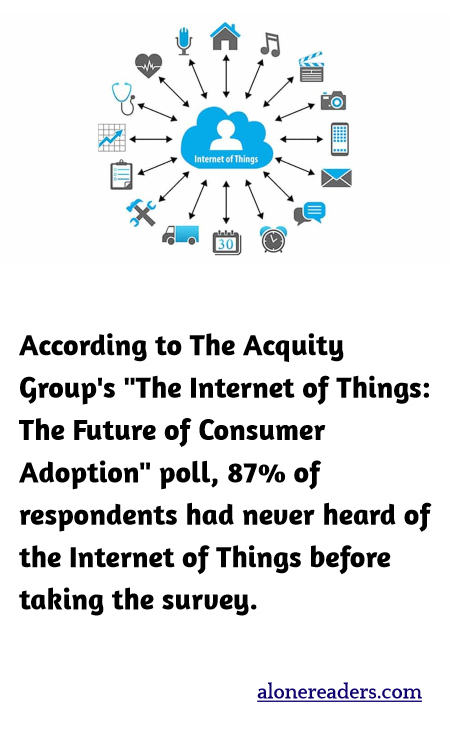
The rapid advance of technology often brings about new concepts and innovations faster than the public can keep pace. A striking example of this is evidenced by The Acquity Group's "The Internet of Things: The Future of Consumer Adoption" survey, which reported that an overwhelming 87% of its respondents were unaware of the term "Internet of Things" (IoT) prior to the survey. This statistic is particularly notable considering the profound impact that IoT is poised to have on everyday life.
The Internet of Things refers to the network of physical objects embedded with sensors, software, and other technologies for the purpose of connecting and exchanging data with other devices and systems over the internet. These objects range from ordinary household items to sophisticated industrial tools. With the capability to transfer data over a network without requiring human-to-human or human-to-computer interaction, IoT blurs the lines between the physical and digital worlds, making smart and connected solutions a reality.
Despite its potential to revolutionize daily tasks and business operations, IoT remains a largely unfamiliar concept to the general public. This unawareness could be attributed to several factors. Firstly, IoT technology is often integrated into devices and applications seamlessly, such that consumers utilize the benefits of connected technologies without necessarily understanding the backend processes or the terminology involved. Secondly, the technical nature of IoT and the vast scope it encompasses can make it intimidating or difficult for laypersons to comprehend fully.
However, as industries continue to embed intelligence into their products and services—from smart thermostats and fitness trackers to automated production lines and urban planning—consumer awareness and understanding of IoT are likely to increase. This growing familiarity could ignite a surge in adoption, as more people begin to recognize how IoT applications can offer enhanced convenience, efficiency, and cost savings in their lives and work.
Educational initiatives and transparent communication by businesses about how they leverage IoT could also play critical roles in demystifying this technology for the general populace. As understanding grows, so too could consumer trust and acceptance, paving the way for a world where the Internet of Things becomes as ubiquitous as the internet itself is today.
