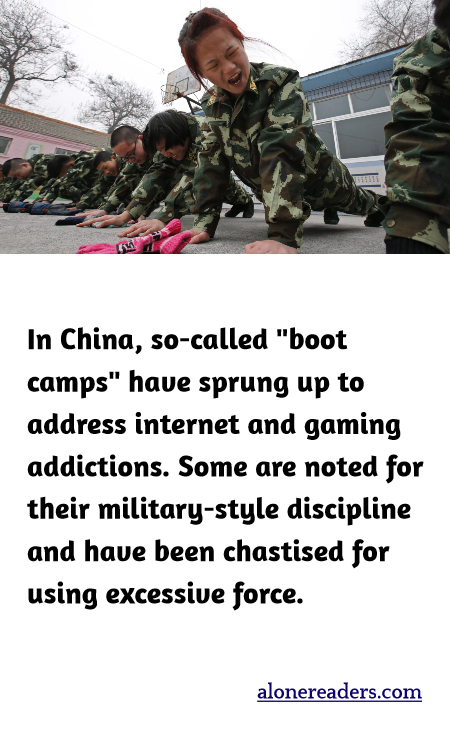
In recent years, the rapid expansion of digital technology has led to increasing concerns about internet and gaming addiction, particularly among the youth in China. In response, numerous "boot camps" have been established throughout the country, aiming to curb these modern addictive behaviors. These facilities often adopt a military-style regimen, where discipline is rigidly enforced in order to cultivate self-control and reduce dependency on digital stimulation.
The methodology of these boot camps varies, but many operate under a strict regime that includes physical exercise, militaristic discipline, psychological counseling, and various forms of educational lectures about the risks and consequences of prolonged internet or gaming activities. The objective is to help participants develop healthier habits and find a balance between the virtual and real worlds.
Despite their popularity and the growing demand for such interventions, these boot camps have been the subject of significant criticism. Reports have surfaced about some centers using excessive force, including physical punishment, verbal abuse, and other harsh methods. Human rights organizations and some medical professionals argue that such tactics can cause psychological harm and are counterproductive, exacerbating the distress and resistance among the attendees.
Moreover, the practical outcomes of these boot camps have been questioned. Critics argue that they might offer only a temporary solution, as they often do not address the underlying psychological issues linked to addiction. Without a comprehensive, tailored approach that encompasses follow-up support and integration into the community, recidivism rates could remain high.
Despite these issues, the prevalence of internet and gaming addiction in China compels communities and families to seek help from these boot camps. It underscores a crucial societal issue: the need for effective, humane interventions in the digital age. As these concerns continue to attract attention, it is key for policymakers, educators, and health professionals to collaborate on developing ethical, scientifically grounded approaches that ensure long-term recovery and respect human dignity.
