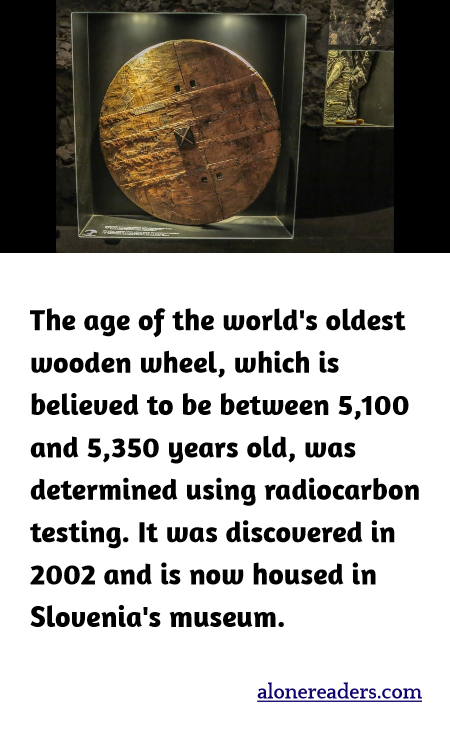
The discovery of the world's oldest wooden wheel significantly contributes to our understanding of ancient technology and engineering. Unearthed in 2002, near the Ljubljana Marshes of Slovenia, this ancient artifact not only showcases the ingenuity of early civilizations but also exemplifies the sophistication in design and functionality that our ancestors managed to achieve thousands of years ago. The wheel, which dates back between 5,100 and 5,350 years, is made from ash and oak woods, materials chosen for their durability and strength.
Radiocarbon testing was pivotal in determining the age of the wooden wheel, providing a reliable and precise dating that helps gauge not just the age but the historical and cultural context of the item. This method of age estimation involves measuring the amount of carbon-14, a radioactive isotope, remaining in the organic material of the wheel. Over time, carbon-14 decays at a known rate, enabling scientists to calculate the age of wood based on the remaining carbon-14 content.
The significance of this wheel extends beyond its age. As a technological artifact, it offers insights into the transportation and trade practices of the era, potentially revolutionizing our understanding of early human mobility and economy. The wheel's design suggests that early Europeans had developed not only the tools but the societal structures necessary to support such innovations, reflecting a complex understanding of mechanics that were crucial for the development of later technologies.
Presently, the wheel is housed in a museum in Slovenia, symbolizing a treasured national heritage that draws interest from historians, scientists, and tourists alike. Its preservation and exhibition are key to ongoing research and education, connecting present and past through the tangible legacy of early human ingenuity. In summary, the oldest wooden wheel serves as a remarkable reminder of human capability and evolution, inviting us to ponder over the millennia of progress that have shaped our modern existence.
