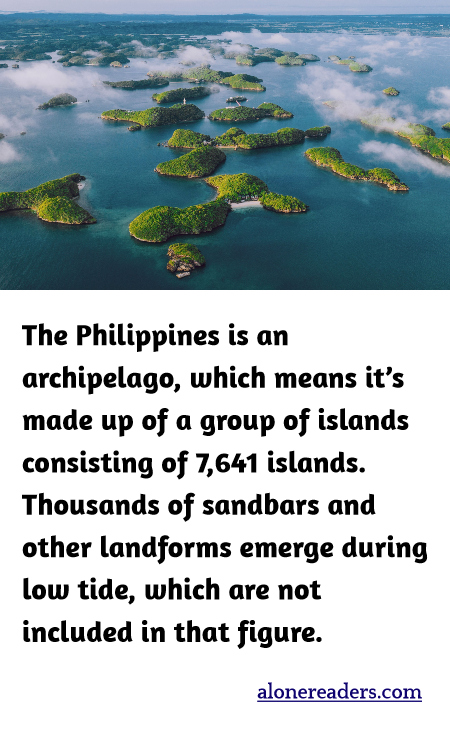
The Philippines, an enchanting archipelago in Southeast Asia, is a sprawling cluster of more than 7,641 islands. Each isle, from the smallest sandbar to the largest landmass, tells a unique story of geography and culture. The archipelago is divided broadly into three main geographic divisions from north to south: Luzon, Visayas, and Mindanao. These islands stretch across a vast area in the western Pacific Ocean, offering a diverse array of landscapes, ecosystems, and cultural experiences.
The count of 7,641 islands increases during low tide when thousands of additional sandbars and temporary islets appear, only to be submerged again at high tide. This dynamic nature of the geography creates a unique environment for both the wildlife and the people who inhabit these islands. The constantly changing shorelines and the rich, biodiverse marine environments that surround the islands are crucial for many communities that rely on fishing and small-scale agriculture for their livelihoods.
Philippine islands are known for their spectacular natural beauty, ranging from the rice terraces of Ifugao in Luzon, which are thought to be over 2,000 years old, to the pristine beaches of Boracay in the Visayas. The archipelago is also one of the world’s biodiversity hotspots, with an extraordinary number of species that are endemic to the islands. This includes the famous Philippine Eagle, one of the largest and most powerful eagles in the world, and the small but significant tarsier, a primate whose eyes are larger than its brain.
Culturally, the Philippines is a melting pot, influenced by a variety of indigenous and foreign elements. Spanish and American influences mingle with ancient traditions, evident in the country's languages, festivals, and daily life. The Filipinos are known for their hospitality, a trait that is extended warmly to visitors, reflecting the country’s amalgamation of cultures.
Tourism plays a significant role in the Philippines' economy, attracting travelers from all over the globe eager to explore its urban centers, historic sites, and vibrant natural ecosystems. Cities like Manila showcase the country’s history through architecture and museums, while smaller towns and villages offer insights into the local cultures and traditions. Despite the challenges posed by natural disasters, such as typhoons and volcanic eruptions, the resilience of the Filipino people and the government's efforts to protect and preserve their nation are notable.
The Philippines, with its array of islands, offers an intriguing exploration into a land of remarkable diversity and beauty. Whether it is the lure of its turquoise waters, the allure of its mountainous terrains, or the charm of its people, the archipelago continues to beckon travelers seeking a diverse and enriching experience.
