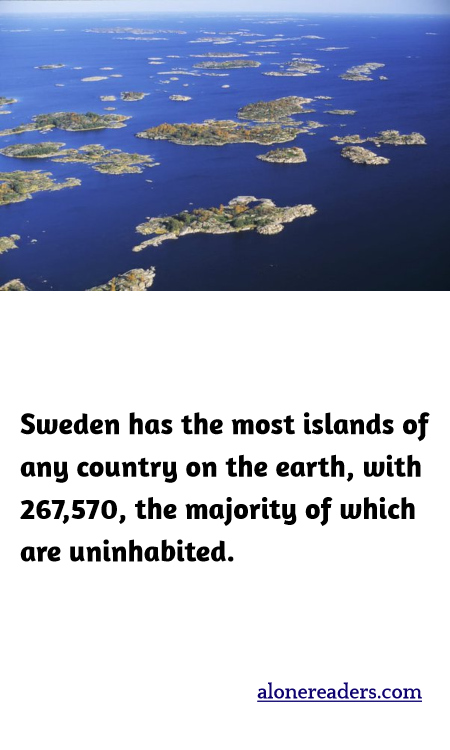
Sweden, often celebrated for its robust welfare state and avant-garde design, boasts another, less widely known title: the country with the most islands in the world. With an astonishing count of 267,570 islands, Sweden’s archipelagos offer an expansive range of natural landscapes and biodiversity, presenting an unexplored paradise for adventurers and nature lovers alike.
The majority of these islands are uninhabited, providing pristine environments that remain largely untouched by human development. This vast number of islands is primarily located along Sweden's Baltic Sea coastline. The Stockholm archipelago, for instance, comprises around 24,000 islands and islets, forming one of the largest archipelagos in Scandinavia. Further north, the Luleå archipelago includes over 1,300 islands and stretches into the Arctic circle, offering dramatic contrasts between summer’s Midnight Sun and winter’s polar nights.
These islands are not only significant for their beauty and ecological diversity but also play a crucial role in Swedish cultural heritage. They offer unique insights into Sweden's history, from ancient times through the Viking era and into the present day. Historically, they served as strategic posts for Vikings and were vital in trade routes across the Baltic Sea.
For modern-day Swedes and tourists, the islands serve a variety of purposes: from residential areas and recreational spots to ecological preserves. The accessibility of many islands varies with the season, given Sweden's northern climate. During warmer months, ferries transport residents and visitors alike, while in the frozen winters, some islands become reachable by foot or on skis over the ice.
This stunning array of islands also plays a critical role in Sweden’s environmental conservation efforts. Many islands are part of nature reserves, protecting diverse ecosystems and wildlife. The uninhabited islands, free from large-scale human infrastructure, are particularly critical for preserving native flora and fauna. These areas provide sanctuaries for numerous species and allow scientists and ecologists to study natural ecosystems relatively undisturbed by human activity.
Sweden's status as the country with the most islands adds a unique dimension to its geographical and cultural landscape, highlighting its commitment to preserving these natural wonders while also embracing their historical and ecological significance. Whether for the casual visitor or the seasoned naturalist, Sweden’s islands offer a broad spectrum of opportunities for discovery and exploration, making them a cherished part of the nation’s heritage and an integral component of its natural beauty.
