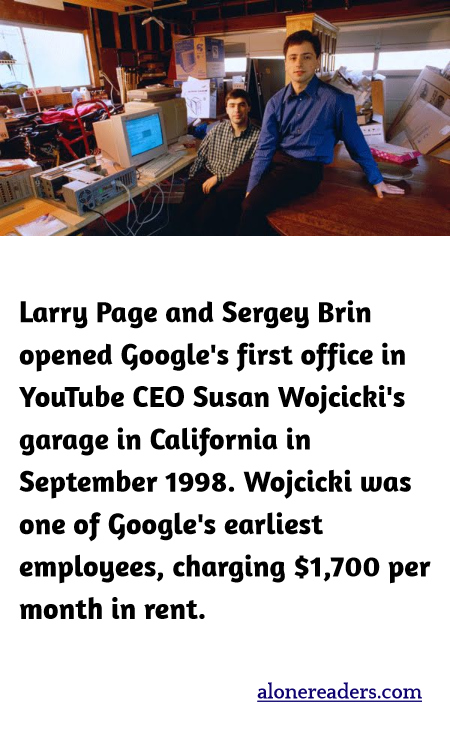
In the late 1990s, the tech landscape was ripe for innovation, and two young visionaries, Larry Page and Sergey Brin, were just about to make an indelible mark on it. In September 1998, the duo set up what was to become one of the world's most powerful companies, Google, in a rather unconventional office space—the garage of Susan Wojcicki’s home in Menlo Park, California. At that time, Wojcicki was not just a landlord but also a key supporter of Page and Brin’s project. For her garage, she charged them $1,700 per month—a modest sum that would soon yield an extraordinary return on investment.
This garage, suffused with ambition and the faint hum of whirring computers, became the birthing room for what was to become a quintessential icon of Silicon Valley success stories. It wasn't long after settling into Wojcicki’s garage that Google began to reshape the internet. The company's rapid ascent from a quirky startup in a borrowed space to a principal actor on the global stage is a testament to the innovative vision of its founders and the early faith shown by people like Wojcicki.
Indeed, Susan Wojcicki’s role in Google’s founding story extends beyond landlord. She became one of Google’s earliest employees and has since climbed the ranks to become a significant figure in the tech industry as YouTube’s CEO. Her garage, once a makeshift office cluttered with cables and computers, stands as a monument to innovation and the humble beginnings of tech giants. The story of Google’s inception in Wojcicki’s garage is not only a pivotal chapter in the company’s history but also a symbol of the potential for small beginnings to lead to astronomical successes in Silicon Valley’s fertile ground for technological advancement.
