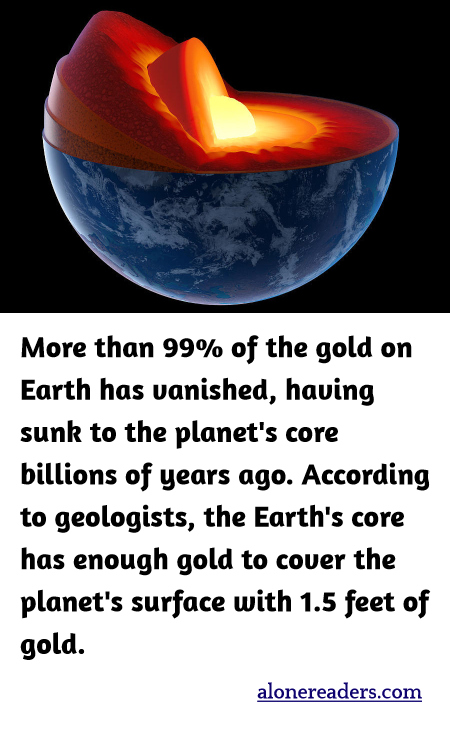
The enigmatic journey of Earth's gold has fascinated scientists and treasure seekers alike for centuries. Notably, more than 99% of the planet's original gold reserves are believed to have disappeared deep into the core, far beyond reach. This vast migration occurred billions of years ago during the early formation and differentiation of the Earth. When it was still a molten mass, heavy elements like gold and iron, due to their high density, gravitated towards the center of the Earth, leaving only a minuscule percent accessible in the crust.
This hidden gold in the Earth's core would be more than sufficient to dramatically adorn the planet's surface. Estimates suggest there's enough gold at the core to cover the Earth with about 1.5 feet of this precious metal. Such an image conjures up visions of a literal gilded age, with landscapes shimmering under a golden blanket. However, accessing this treasure trove is beyond current technological capabilities, as the core lies nearly 2,900 kilometers beneath the Earth’s surface under immense pressures and temperatures.
The scarcity of gold that we experience today is precisely because it is locked up so deep within the Earth. The gold that is mined today comes from just that meager amount that didn’t sink to the core. This gold is found in alluvial deposits and mined from the small quantities embedded in rocks and minerals.
It's a fascinating thought that most of the Earth's gold is actually sequestered at its core, shaping our economy in profound ways. The rarity of this metal on the surface influences its value and has spurred economic activities, ranging from mining ventures to the crafting of jewelry and use in electronics. Moreover, this scarcity and the historical allure of gold continue to make it a highly sought-after commodity around the globe.
