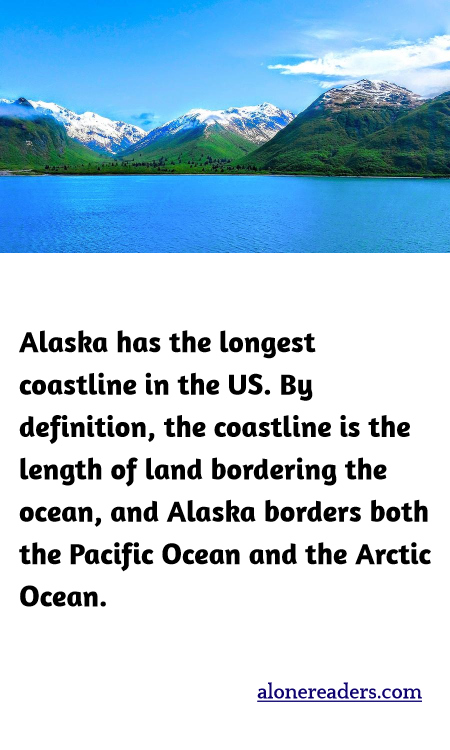
Alaska, the largest state in the United States by area, also holds the distinction of having the longest coastline in the country. This expansive state stretches across the northwest extremity of North America and features a vast and intricate network of coastal borders, predominantly along the Pacific Ocean and the Arctic Ocean. This unique geographical positioning gives Alaska a coastline that is longer than all other states combined, totaling about 6,640 miles according to the National Oceanic and Atmospheric Administration (NOAA).
The long coastline of Alaska is not just a geographical characteristic but it also plays a crucial role in both the ecosystem and the economy of the state. The coasts are home to a rich biodiversity including marine life, birds, and terrestrial animals, many of which are integral to Alaska's commercial and subsistence fishing industries. These industries are vital to the local economy providing jobs and food resources. The coastline also supports a vibrant tourism industry which capitalizes on the state’s natural beauty and unique wildlife viewing opportunities.
Moreover, Alaska's coastal regions are crucial for cultural and heritage reasons, particularly for numerous indigenous groups whose history and way of life are deeply intertwined with the marine environment. These communities rely on the coastal resources for their subsistence, cultural practices, and economic activities.
However, managing such a lengthy coastline is not without challenges. Environmental concerns such as coastal erosion, melting sea ice, and climate change effects pose significant threats to Alaska’s coastlines. These changes have not only environmental consequences but also impact the communities and wildlife that depend on these ecosystems. In response, various conservation efforts and initiatives aimed at sustainable management and protection of coastal areas are increasingly important in preserving this key feature of Alaska’s landscape.
Understanding and respecting the lengthy and dynamic coastline of Alaska is essential for ensuring its preservation and continued contribution to the state’s natural heritage and economic stability. This expansive coastal area demonstrates the state's uniqueness not only in terms of natural beauty and wildlife but also its significant impact on the lives of those who live in and visit Alaska.
