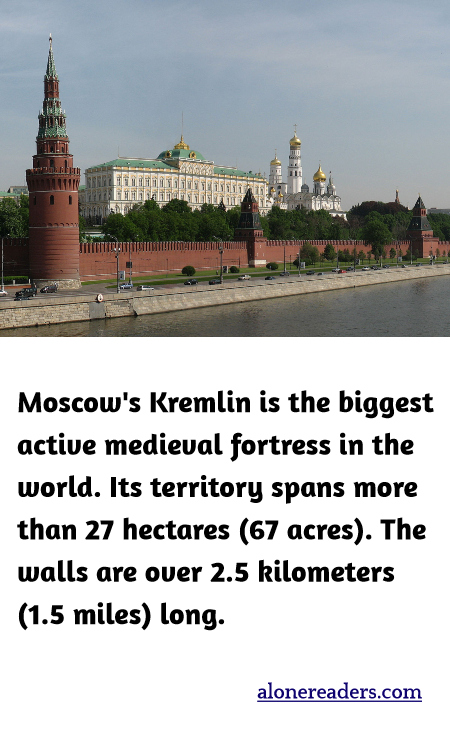
Moscow's Kremlin stands not only as a symbol of Russia's political power but also as the largest active medieval fortress globally. Encompassing more than 27 hectares (67 acres), this historic citadel serves as the official residence of the President of Russia, and its influence is deeply etched in the annals of Russian history. The origins of the Kremlin date back to the 2nd millennium BC, but it was in the 15th century when the current walls and towers were constructed under the orders of Grand Prince Ivan III, also known as Ivan the Great.
The walls of the Kremlin stretch over 2.5 kilometers (1.5 miles), enclosing a complex of palaces, armories, and cathedrals. The architectural ensemble within the Kremlin walls represents a variety of periods and styles that have evolved over centuries; from medieval churches with golden domes to the grandiose Palace of the Facets, which was once the main banquet hall for Russian Tsars.
Tourists and historians alike are drawn to this iconic fortress, not only because of its political significance but also due to its architectural grandeur and historical importance. The Kremlin's museums hold priceless artifacts and state regalia, including the renowned Tsar Cannon and Tsar Bell, the largest of their kind in the world. Each artifact and building within the Kremlin's walls narrates a distinct chapter of Russian history, from the time of tsars through the Soviet era and into the contemporary period.
Moreover, the Kremlin is not just a silent witness to history; it actively participates in the making of global and domestic policies to this day. State ceremonies, diplomatic meetings, and presidential affairs conducted within its territory echo the ongoing relevance of this ancient fortress in modern times. Thus, Moscow's Kremlin is a monumental blend of rich history, architectural magnificence, and political authority, continuing to stand as a central figure in the cultural and political landscape of Russia.
