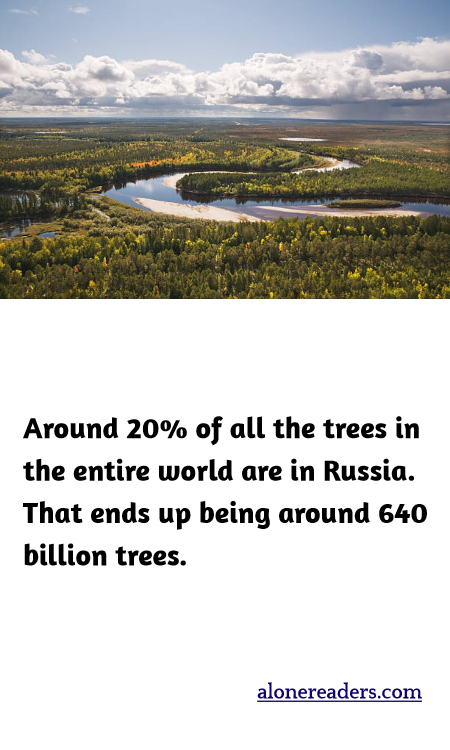
Russia is often characterized by its vast landscapes and formidable climate, but one of its most remarkable features is its extensive forest cover. Encompassing about 20% of the world's trees, Russia’s forests are not just a natural wonder but also a vital component of the global ecosystem. This translates to roughly 640 billion trees sprawling across the nation, comprising a significant portion of the Earth’s lungs.
These expansive woodlands, primarily composed of Siberian Larch, Scots Pine, Birch, and Spruce, stretch across the vast Siberian taiga. This region is one of the world’s largest continuous stretches of forest, and its size and health have profound implications not only for biodiversity within Russia but also for the global climate. Trees naturally absorb carbon dioxide, a greenhouse gas, from the atmosphere, and store it, which makes them integral in combatting climate change. In this way, Russian forests play a critical role in carbon sequestration, mitigating the impacts of global warming.
Moreover, these forests are home to an array of wildlife, including iconic species such as the Siberian tiger, Amur leopard, and countless birds species, which depend on this habitat for their survival. The biodiversity contained within these woods is vast and contributes significantly to the ecological health of the planet.
However, these forests face several threats, including logging, mining, and the effects of climate change itself, such as increased wildfires and pest outbreaks. These challenges pose a risk not just to the wildlife and the trees but to the climate regulating functions the forests serve. Sustainable management and conservation efforts are crucial to maintaining the health and survival of Russia's forests. Initiatives both within Russia and through international cooperation are necessary to ensure that these woodlands can continue to support global ecological balance and carbon cycling.
Recognizing the worldwide importance of its forests, Russia has implemented various protection measures and has engaged in international climate agreements. More widespread and effective conservation strategies, combined with global efforts to reduce carbon emissions, are essential for the continued health of these vital ecosystems. In sum, the immense tree population in Russia is not only a feature of national pride but a critical element in the fight against climate change, underscoring the interconnected nature of local actions and global environmental health.
