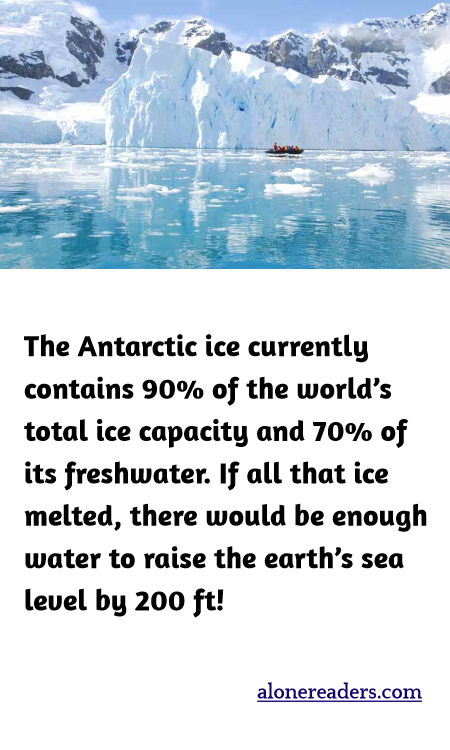
The Antarctic ice sheet is a colossal reservoir of ice, holding about 90% of the world's total ice volume and 70% of its freshwater. This vast, icy expanse plays a crucial role in the Earth's climate and its ocean systems. The significance of Antarctica’s ice goes beyond just its sheer scale; its potential impact on global sea levels is a critical concern for scientists and policymakers alike.
If the Antarctic ice were to melt completely, the consequences for global sea levels would be profound and potentially catastrophic. It is estimated that the complete melting of this ice would cause sea levels worldwide to rise by approximately 200 feet. Such a dramatic increase would reshape coastlines around the globe, submerging many of the world’s major cities, including New York, London, and Tokyo, and displacing millions of people from their homes.
The melting of Antarctic ice isn't just a theoretical concern. Scientific data indicates that the region is experiencing significant changes, with the ice melting at an accelerating rate due to global warming. The increase in global temperatures, caused primarily by human activities such as burning fossil fuels and deforestation, is contributing to this accelerated melting. This not only raises sea levels but also affects global climate patterns and ocean circulation.
Moreover, the Antarctic ice sheet acts as a reflective barrier that helps to regulate the earth’s temperature by bouncing solar radiation back into space. A reduction in the ice cover would therefore lead to further temperature increases, creating a feedback loop that could exacerbate global warming.
Preventative measures and global cooperation are crucial to mitigate these potential impacts. International efforts like the Paris Agreement aim to curb global warming by reducing carbon emissions and promoting sustainable practices. Furthermore, scientists continue to monitor Antarctic ice through satellite technology and ground measurements to better predict and prepare for future changes.
In conclusion, the vast ice sheets of Antarctica are more than just a remote, frigid wilderness. They are a critical part of our planet's environmental health and a buffer against climate change. Understanding and preserving Antarctica's ice is not just about saving a distant continent; it's about protecting our global environment and the future of humanity on Earth.
