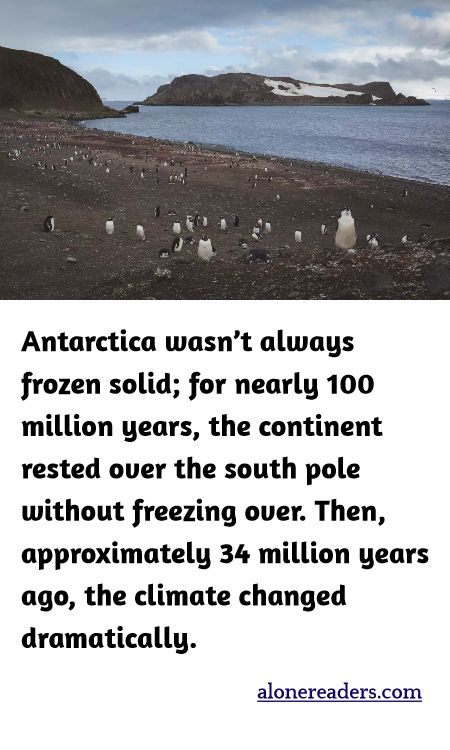
Antarctica, the icy landmass known as the Earth's southernmost continent, is today synonymous with ice and snow. However, this vast region hasn't always been a frozen wasteland. For nearly 100 million years, Antarctica occupied a position over the South Pole but remarkably managed to evade the frosty fate that defines it today. This was primarily due to the planet's climatic conditions and atmospheric concentrations which were vastly different from what we see now.
The pivotal change occurred about 34 million years ago during a period known as the Eocene-Oligocene transition. Prior to this shift, Earth's atmosphere had higher concentrations of carbon dioxide and the global climate was much warmer. Both flora and fauna, including forests and dinosaurs respectively, thrived on the continent. Antarctica was more akin to the modern-day landscapes of New Zealand or the Pacific Northwest of the United States.
As the Eocene Era drew to a close and the Oligocene Epoch began, profound changes unfolded globally. Scientists believe that a combination of factors contributed to the dramatic cooling and the development of an ice sheet across Antarctica. One major factor was the decline in atmospheric carbon dioxide levels, which reduces the greenhouse effect that retains heat in the atmosphere. This reduction in carbon dioxide was likely influenced by the increased weathering of silicate rocks, which absorbs CO2 during the process.
Simultaneously, the opening of the Southern Ocean gateway, due to continental drift, played a crucial role. The formation of the Drake Passage between South America and Antarctica and the Tasman Gateway between Australia and Antarctica facilitated the development of a circumpolar current that isolated Antarctica thermally. This oceanic change effectively set up a cold barrier around the continent, allowing an ice sheet to develop and persist.
This glaciation marked a significant shift not only in the climatic conditions of Antarctica but also had broader implications for Earth's climate system, influencing ocean currents, sea levels, and global temperature gradients. The transformation from a temperate to a frigid continent profoundly affected not just the biodiversity that could survive there, but also the geologic and atmospheric science that researchers study today.
Understanding the historical climate of Antarctica is crucial for scientists trying to predict future climate changes. The history of Antarctica's climate offers valuable insights into how natural factors like geographic isolation and atmospheric composition can drastically transform the Earth's surface and the life it supports. As we face modern challenges with climate change and global warming, lessons from Antarctic's past become ever more relevant, guiding policies and strategies to mitigate environmental change.
