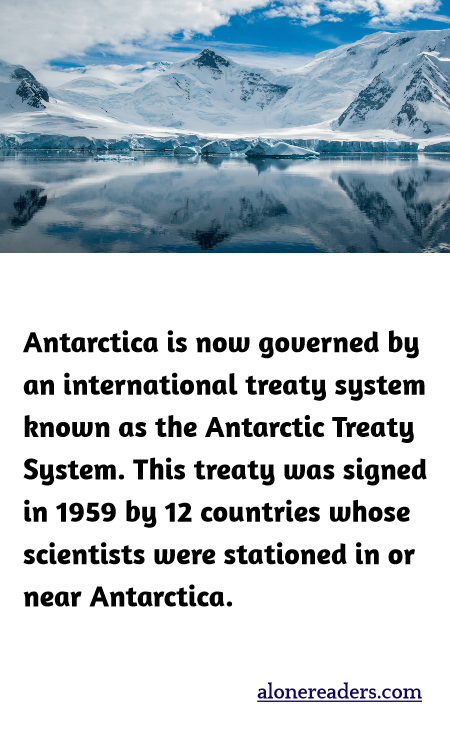
Antarctica, the southernmost continent and site of the South Pole, is a virtually uninhabited, ice-covered landmass. Most known for its extreme cold, icy conditions, and polar phenomena like the Aurora Australis, it also plays a crucial role in global environmental health. However, its governance is unique, governed not by any one nation but under the Antarctic Treaty System.
The Antarctic Treaty was signed on December 1, 1959, and became effective in 1961. Originally signed by 12 countries—Argentina, Australia, Belgium, Chile, France, Japan, New Zealand, Norway, South Africa, the Soviet Union, the United Kingdom, and the United States—today it has 54 parties. These original 12 nations had scientists actively involved in and around Antarctica at the time of the treaty’s signing, which is primarily aimed at promoting international peace and scientific cooperation in Antarctica.
The treaty was a groundbreaking initiative in international law and relations, setting aside a vast expanse of the planet for peaceful purposes and scientific exploration. It prohibits military activity, mineral mining, and nuclear testing, thus maintaining the continent's pristine nature. Critical to its success is the stipulation that encourages scientific research and the exchange of data among the nations. Under this treaty system, conferences, meetings, and negotiations continue to address emerging issues and cooperative efforts, evidencing a remarkable international commitment to preserving the continent.
One of the most significant aspects of the treaty is the principle that mandates that Antarctica be used exclusively for peaceful purposes and that it remains free of any territorial sovereignty claims. This has not only prevented the possibility of conflict but also provided a platform for a unique form of international cooperation.
Indeed, the Antarctic Treaty System exemplifies how diplomacy can be successfully employed to manage and preserve one of the planet's most extreme environments. As challenges like climate change threaten Antarctica's ice masses and ecosystems, the ongoing international cooperation facilitated by this treaty remains crucial. It not only helps in the understanding of global climate patterns and ecosystem changes but also in making informed decisions to mitigate environmental impacts.
Furthermore, the treaty is supported by several related agreements that collectively are known as the Antarctic Treaty System. These include the Convention for the Conservation of Antarctic Marine Living Resources and the Protocol on Environmental Protection to the Antarctic Treaty, which specifically addresses environmental preservation and designate Antarctica as a natural reserve devoted to peace and science. These agreements ensure that while Antarctica serves as a natural laboratory for scientific research, it is also a well-preserved testament to the power of peaceful international collaboration.
