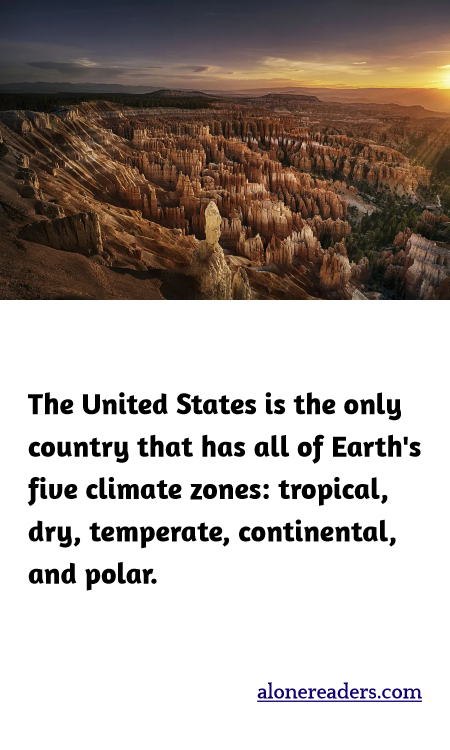
The geographic and climatic diversity of the United States is a remarkable aspect of the country, making it unique as the only nation in the world that encompasses all five of Earth's major climate zones: tropical, dry, temperate, continental, and polar. This vast range of climates contributes to a rich variety of landscapes, ecosystems, and weather patterns across the country, facilitating a diverse array of lifestyles and economic activities.
In the tropical climate zone, you'll find places like Hawaii and the southern parts of Florida, characterized by warm weather year-round and abundant rainfall, fostering lush vegetation and vibrant wildlife. This climate is conducive to agriculture that includes crops like pineapples and sugarcane and supports a flourishing tourism industry due to its picturesque beaches and scenic landscapes.
The dry zones, encompassing parts of the Southwest including areas of Arizona, Nevada, and California, feature arid and semi-arid climates. These regions see very little rainfall and have extreme temperature variations between day and night. The landscapes are often marked by deserts and rugged mountains, limiting agriculture but creating unique opportunities for solar energy generation and mineral extraction.
Much of the central and eastern United States falls under the temperate climate zone, experiencing four distinct seasons with relatively moderate temperature fluctuations and sufficient rainfall, conducive for a broad range of agricultural practices. This zone supports the country’s breadbasket, with vast fields of wheat, corn, and other staples, promoting a stable food supply and contributing to global food security.
The continental climate zone covers the northern central part of the country, including states like Minnesota and parts of the Dakotas and Alaska. This zone is characterized by more severe temperature differences between summer and winter, which poses challenges to agriculture but provides opportunities for seasonal activities such as snow sports in winter and agricultural festivals in summer.
Finally, the polar zone, found in Alaska, is marked by very cold temperatures most of the year. This climate supports unique ecosystems and wildlife suited to harsh conditions, such as polar bears and caribou, and plays a critical role in climate regulation, as these areas are significant for their permafrost and ice caps.
The presence of all five climate zones within the United States not only highlights its environmental diversity but also underscores the complex interplay between geography and the lived experiences of its residents. This climatic variety influences everything from economic decisions and cultural practices to policy making concerning climate adaptation and sustainable living. It presents both opportunities and challenges, requiring region-specific strategies to harness or mitigate the impacts of climatic conditions effectively.
