More About This Card
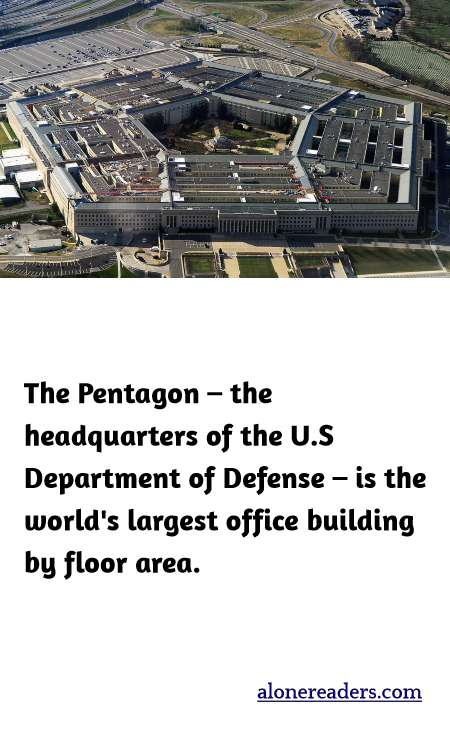
The Pentagon, located in Arlington, Virginia, stands as an iconic symbol of American military power. Not only is it the headquarters of the United States Department of Defense, but it also holds the title of the world's largest office building by floor area. With a total floor area of about 6.5 million square feet, the Pentagon is a monumental structure in both size and significance.
Constructed during the early years of World War II, the Pentagon was designed by American architect George Bergstrom and built by general contractor John McShain. Remarkably, the building was completed in just 16 months, a testament to the urgency of the wartime period and the need for a dedicated headquarters for the U.S. military forces. Its design, a five-sided pentagonal shape, was chosen to efficiently use the plot of land available at the time and has since become a defining feature of the building.
The Pentagon comprises five concentric rings, labeled from "A" to "E" with increasing distance from the center. These rings are interconnected by a series of corridors that form a layout that is both functional and secure. The building houses approximately 23,000 military and civilian employees who perform a vast array of duties, ranging from strategic planning and policy development to essential administrative tasks.
The Pentagon is not only a workplace but also a symbol of the resilience and strength of the United States. It has its own zip code and houses a variety of facilities including a shopping mall, a post office, and a dedicated metro station. Moreover, it is steeped in history, having endured significant events such as the September 11 attacks in 2001. That day, one of the hijacked planes, American Airlines Flight 77, crashed into the building's western side, leading to extensive damage and tragic loss of life. The incident sparked major renovations aimed at improving both the infrastructure and security measures of the Pentagon.
Today, the Pentagon remains a crucial and highly secure area, often at the forefront of U.S. defense strategies. Its vast corridors and extensive working environment continue to support the operations of the Department of Defense, playing a critical role in both national and international security affairs. Public tours are available, offering visitors insight into the day-to-day operations of what is truly a cornerstone of American military operations.