More About This Card
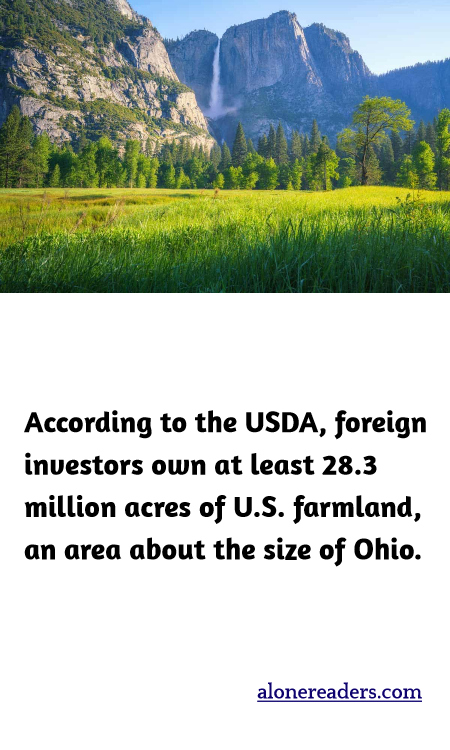
Foreign ownership of U.S. farmland has reached significant levels, with at least 28.3 million acres reportedly under the control of international investors. This figure, representing an area equivalent to the size of Ohio, highlights a growing trend that has potential implications for agricultural policy, rural communities, and national security.
The allure for foreign entities in investing in U.S. farmland is multifaceted. Predominantly, these lands are seen as stable, profitable investments amidst global economic fluctuations. Additionally, owning farmland can provide investors with strategic advantages in terms of food security and access to key agricultural technologies and products.
However, this trend raises several concerns. Economically, the increase in foreign ownership could escalate land prices, making it harder for local farmers to expand their operations or for new farmers to enter the market. This could lead to a decline in the number of family-operated farms, a shift that might affect rural community identity and sustainability. Politically, there is anxiety about the extent to which foreign control over U.S. farmland could affect national policymaking. Questions arise about whether foreign investors will adhere to local regulations concerning environmental conservation and labor rights, or if they might prioritize profit over long-term stewardship of the land.
Socially, the consolidation of farmland under foreign and often corporate ownership might lead to changes in farming practices, potentially shifting away from traditional methods that are considered more in harmony with local ecosystems. This could have long-term environmental impacts, including biodiversity loss and altered soil health, which could, in turn, affect food security and sustainability.
In response to these concerns, several states have enacted laws to limit foreign ownership of their agricultural land, although the effectiveness and enforcement of these regulations vary. Moreover, there is a call for more comprehensive national policy measures to manage and potentially restrict foreign ownership of American farmland, reflecting a careful balance between encouraging investment and protecting national interests.
The subject of foreign land ownership in the U.S. opens up a complex debate involving economic benefits, agricultural sustainability, and national security. As the situation evolves, it may necessitate a reevaluation of agricultural, economic, and security policies to ensure they adequately reflect the changing landscape of ownership and control over America's farmland.