More About This Card
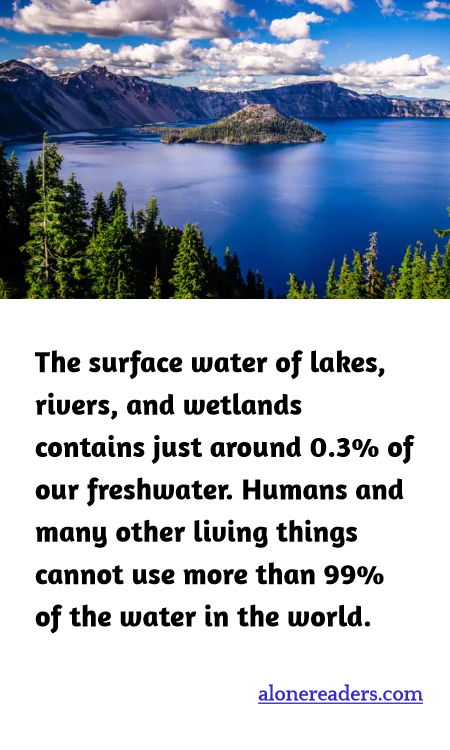
Freshwater is essential for human survival, supporting everything from basic hydration to agriculture and industrial processes. Yet, despite its critical importance, only a tiny fraction of the Earth's water is accessible and suitable for human use. Surface water, which includes the water found in lakes, rivers, and wetlands, constitutes about 0.3% of the world's freshwater resources. This might sound sufficient, but when one considers the global distribution and accessibility issues, the situation often becomes complicated.
The majority of Earth's water, about 97%, is saline and found in oceans and seas, making it unsuitable for drinking or irrigation due to its high salt content. The remainder is freshwater, but more than 99% of that freshwater is locked up in glaciers, ice caps, and below the ground. Just a sliver is available in easily reachable surface sources. This distribution poses a significant challenge as populations grow and climate change affects water cycles.
Water scarcity is becoming a critical problem in many parts of the world, exacerbated by climate change and increased human consumption. Regions that rely heavily on surface water for their water supply can experience shortages that affect not only drinking water availability but also agriculture and industry. In many places, the reliance on rapidly depleting groundwater supplies increases as surface water sources become less reliable due to pollution or insufficient replenishment.
Moreover, the quality of available surface water can be severely impacted by pollution from industrial activities, agricultural runoff, and improper waste disposal. This pollution can lead to waterborne diseases and ecosystem degradation, further limiting the amount of usable freshwater.
In order to address these challenges, sustainable water management practices are essential. This includes measures like improving water conservation and efficiency, investing in better wastewater treatment technologies, and developing policies that protect water sources from pollution. Additionally, developing new technologies for desalination and water recycling can help increase the supply of usable water.
Efforts to preserve and expand access to freshwater resources are critical, not only for human health and prosperity but also for the maintenance of the world's ecosystems. The situation demands a concerted effort from governments, communities, and individuals to ensure that this precious resource is managed wisely so that future generations can also depend on it for their survival.