More About This Card
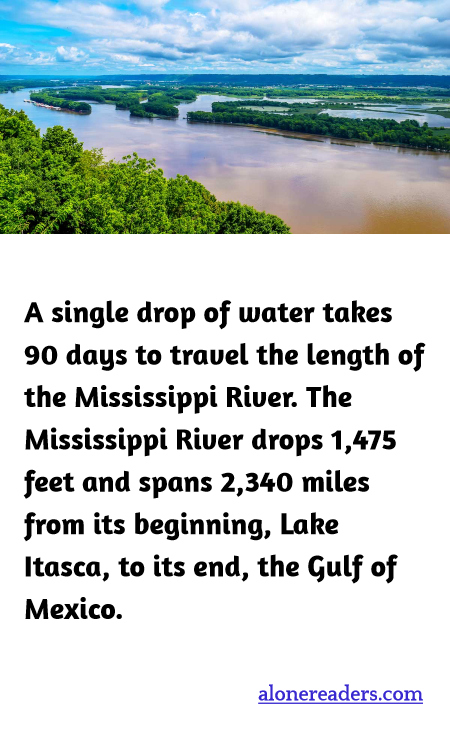
The journey of a single drop of water down the Mississippi River is a remarkable natural expedition that garners less attention than it deserves. Spanning an impressive length of about 2,340 miles, the river starts its course from Lake Itasca in Minnesota and meanders through the heart of the United States to reach the Gulf of Mexico. Over this vast distance, the river experiences a significant descent, dropping about 1,475 feet from its origin to its terminus.
The mesmerizing odyssey of a drop of water taking 90 days to complete this journey highlights the Mississippi's meandering pace and intricate pathway through ten states. This lengthy voyage comprises passing through varying landscapes and ecosystems that characterize each region it flows through, adding to its ecological and geographical significance. Along the way, the river supports a diverse array of wildlife and plant species, some of which are unique to its basin. Furthermore, it plays a crucial role in the human sphere as well, boosting economic activities by serving as a vital transportation and trade route, and providing water for agriculture and communities.
This slow journey is not just a feat of distance and time but also serves as a testament to the geological and environmental evolution of the region. Seasonal changes and climatic conditions influence the river's flow rate and water levels, sometimes speeding up the journey of the water droplets, other times slowing it down. Moreover, human activities such as damming and various forms of river engineering have also played a part in altering the natural state and pace of the river.
Understanding the dynamics of the Mississippi River through the lens of a single drop of water sheds light on the interconnectedness of natural water systems and the profound impact they have on the environment and human life. It underscores the importance of preserving such precious water resources in the face of industrial growth and environmental changes, ensuring they continue to sustain life in myriad forms along their paths. Not only does the river's extensive course forge essential physical and economic links, but it also creates indelible cultural and historical ties among the communities along its banks, reinforcing its status as more than just a river, but a lifeline.