More About This Card
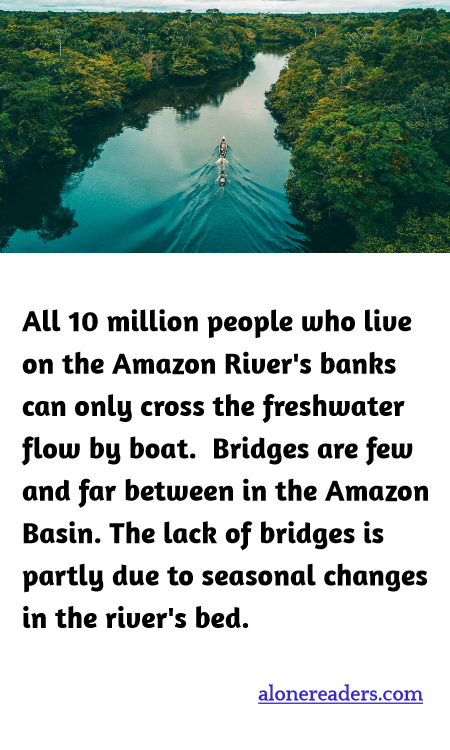
Navigating the Amazon River, the lifeblood of South America that stretches across eight countries, presents unique challenges for the 10 million people residing along its banks. Unlike urban landscapes crisscrossed with bridges, the expansive Amazon Basin remains largely unbridged. This is primarily attributed to the logistical and environmental hurdles posed by the river itself.
The Amazon River is famed for its enormous scale and the dynamic nature of its waterways, which swell dramatically during the wet season. This fluctuation causes significant changes in the river's breadth and depth, complicating the construction of permanent bridges. Seasonal variations can alter the river's width, affecting areas upwards of 11 kilometers at its widest points during peak flood stages. These changes not only influence the feasibility of bridge construction but also the surrounding ecosystems, making engineering solutions both difficult and potentially ecologically disruptive.
As a result, residents of the Amazon Basin predominantly rely on riverboats as their main mode of transport. Boats of various sizes and functions navigate these waters, serving as essential links between communities, markets, and essential services. This reliance on boat travel shapes the cultural and economic activities throughout the region, with everything from commerce to education often taking place across riverine networks.
Moreover, the absence of bridges does not only reflect the challenging geography but also underscores broader issues such as economic constraints and the prioritization of environmental conservation. Building infrastructure in such a sensitive environment carries the risk of significant ecological impact, including disruption to the habitats of myriad species that the river supports, some of which are found nowhere else on the planet.
In light of these challenges, some innovative solutions have been proposed and implemented to improve connectivity without undermining the ecological integrity of the Amazon. These include portable, low-impact bridges and improved ferry services that can adapt to the changing river levels. Additionally, technology plays a role, with some communities utilizing solar-powered boats and other renewable energy resources to maintain sustainability.
In conclusion, the Amazon's vast and changing landscape necessitates unique solutions for transportation. While the lack of bridges presents difficulties for the river's inhabitants, it also necessitates a balance between development and the preservation of one of the world's most vital ecological zones. As such, the future of infrastructure in the Amazon Basin lies not just in overcoming physical and economic challenges, but also in harmonizing these developments with the needs of the environment.