More About This Card
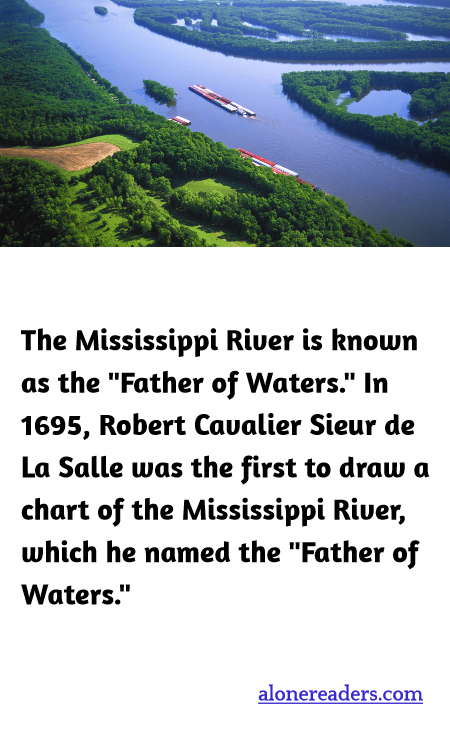
The Mississippi River, often hailed as the "Father of Waters," is one of the most significant waterways in the United States and holds a fascinating position in both the nation’s history and ecology. Its name, which derives from the Ojibwe word "Misi-ziibi," meaning "Great River", is itself a nod to its expansive reach and profound influence. Stretching approximately 2,340 miles, it is the second-longest river in North America, winding through or touching ten states from Minnesota to Louisiana before spilling into the Gulf of Mexico.
The moniker "Father of Waters" can be traced back to the French explorer Robert Cavalier Sieur de La Salle, who in 1695 became one of the early Europeans to chart and explore its vast length. His expedition along the river was monumental, resulting in one of the first detailed maps of its course, thereby setting the stage for further exploration and settlement by Europeans.
The river has played a pivotal role in the history of America. It served as a critical artery of transport and commerce during the westward expansion of the early United States, carrying timber, crops, and goods between the agricultural heartlands in the Midwest to ports along the Gulf Coast. Towns and cities sprang up along its shores, flourishing with the rise of steamboat traffic in the 19th century, which further cemented the river’s place in the economic development of the nation.
Ecologically, the Mississippi River supports a remarkably diverse array of species and serves as a critical habitat for numerous birds, fish, and wildlife. Its basin provides essential nutrients to the Gulf of Mexico, supporting one of the richest fisheries in the world. However, the river also faces significant environmental challenges. Issues such as pollution, habitat destruction, and the impacts of climate change threaten its ecosystems and, by extension, the flora and fauna it supports.
Throughout its history, from Native American use, to European exploration, to its role in the Civil War, and as a catalyst for the cultural exchanges that have defined the region, the Mississippi River has been a constant, powerful presence in the American landscape. It has inspired countless works of art, literature, and music, engraving itself into the nation’s cultural fabric. As the "Father of Waters," the Mississippi continues to weave its narrative, one that is deeply intertwined with the life and history of America.