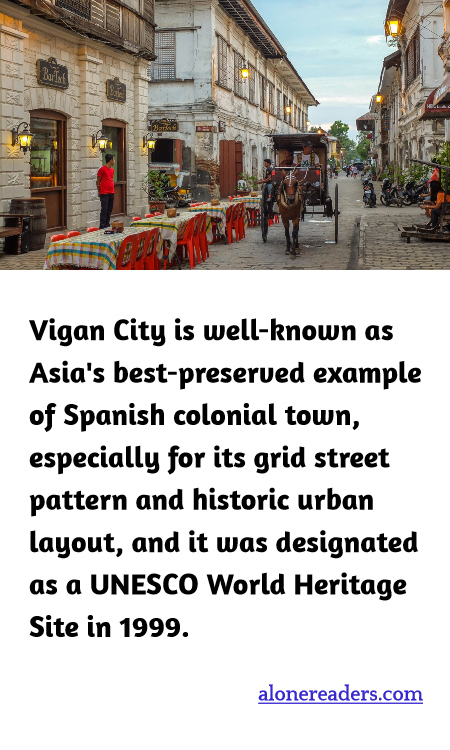
Nestled on the western coast of the large island of Luzon in the Philippines, Vigan City stands as a vivid testament to the blending of cultural elements. Most notable for its exceptionally preserved Spanish-era architecture, Vigan City offers a unique glimpse into the colonial past of the Philippines and serves as a living museum of a planned Spanish colonial town.
This historical city’s most distinctive feature is its grid street pattern and historic urban layout, which exemplifies the fusion of the cultural elements from the Philippines and colonial Spain, alongside influences from China and Europe. The layout of Vigan has made it exceptionally strategic, both for trade and defense during the colonial period. This intricacy and cultural integration are what led to Vigan's designation as a UNESCO World Heritage Site in 1999.
The heart of Vigan's charm lies in its famous Mestizo District, where cobbled streets are lined with houses that feature filigreed wooden upper stories and capiz shell sliding windows. This architectural style is a blend of native Philippine, Oriental, and colonial European designs. It suggests not only aesthetic harmony but also the existence of a richly diverse and interconnected society.
Vigan is not just about the architectural heritage; it is also about the preservation of age-old craftsmanship. The city is a hub for traditional crafts such as pottery-making, weaving of inabel (traditional handwoven cloth), and crafting of burnay (clay pots). These crafts are not only a nod to the city’s cultural riches but also play a crucial role in Vigan’s economy.
Moreover, the city's preservation efforts extend beyond merely maintaining old structures; there is a vibrant push towards keeping the living culture intact. The locals, with support from both governmental and non-governmental organizations, actively participate in the preservation of their town’s heritage, ensuring that traditions are passed down and remain a cornerstone of daily life.
Visitors to Vigan can experience these traditions firsthand, particularly during vibrant festivals like the Vigan Binatbatan Festival of the Arts, an annual celebration that showcases the rich cultural heritage through dances, traditional games, and culinary events.
Vigan's approach to preservation serves as a model, demonstrating how heritage cities can maintain their historical significance while adapting to the needs of the modern age. As a city, Vigan stands as a beacon of cultural preservation, continually reminding us of the importance of safeguarding our historical spaces to enrich future generations.
