More About This Card
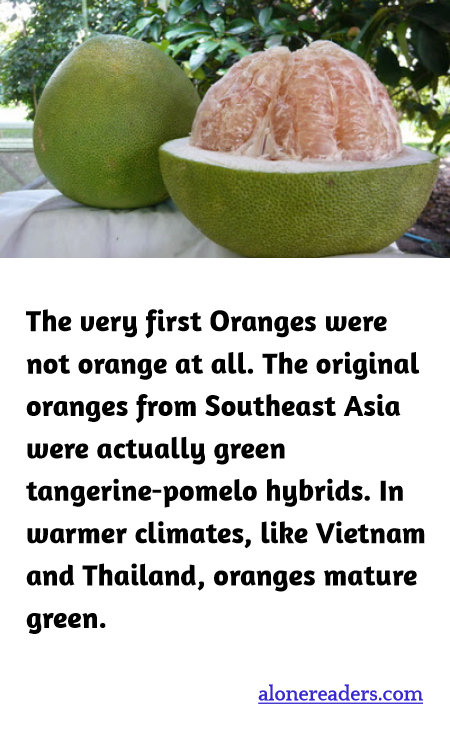
Oranges, one of the most popular fruits worldwide, have a fascinating history that traces back to ancient Southeast Asia. Contrary to what many might assume, the earliest oranges were not the bright, vibrant orange-colored fruits that are commonly seen today. In fact, these original oranges were green. This is because they were initially green tangerine-pomelo hybrids.
The story of the orange begins over 4,000 years ago in regions that are now modern-day Vietnam and Thailand, among other parts of Southeast Asia. These early oranges were quite different from those we are familiar with today; they were more bitter and had thicker rinds. Importantly, the green coloration of these fruits was not an indication that they were unripe but rather a natural characteristic of their appearance in the tropical climate.
In these warm climates, many citrus fruits remain green even when they are fully ripe. This is because the green chlorophyll pigments in the peel do not break down completely in the presence of warm temperatures. Instead, the green color persists even through maturity. This adaptation perhaps plays a role in the fruit blending in with the surrounding foliage, potentially helping to protect them from being prematurely picked by foragers who might assume they are not yet ripe due to their color.
Over centuries, as trade routes expanded and the cultivation of oranges spread to different parts of the world, selective breeding and mutations led to the development of sweeter varieties and the vibrant orange color we now associate with the fruit. The orange color became more common as oranges were cultivated in regions with cooler winters, which encouraged the breakdown of chlorophyll and revealed the orange carotenoid pigments.
Today, while the bright orange oranges are predominant in supermarkets around the world, green oranges can still be found in local markets across Southeast Asia. These fruits remind us of the rich history and evolution of the orange from a green, bitter fruit to the sweet, colorful variety that graces our fruit bowls today. Thus, the orange is not just a simple fruit, but rather a testament to the dynamic and intertwined nature of human agricultural practices and botanical evolution.