More About This Card
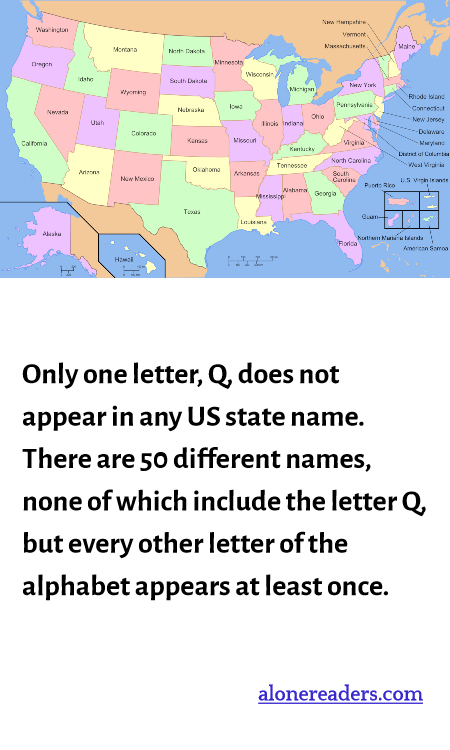
When delving into the peculiarities of the English language and its application in the naming of the U.S. states, an intriguing fact emerges: the letter 'Q' does not appear in the name of any of the 50 states. This oddity becomes even more fascinating when considering that every other letter in the English alphabet is used in state names at least once. Such a detail might seem trivial at first glance, but it offers a window into the linguistic diversity and historical influences that have shaped the United States.
The absence of the letter 'Q' in U.S. state names might reflect the linguistic origins of these names. Many state names are derived from Indigenous languages, Spanish, French, or other languages that influenced early American explorers and settlers. For example, Arizona comes from the Spanish interpretation of an O'odham phrase, California from a Spanish novel, and Texas from a Caddo word. Since 'Q' is less common in these languages compared to others like English, its absence in state names highlights the impact of these languages in naming places in North America.
Furthermore, this curiosity about the letter 'Q' leads to an appreciation of how state names encapsulate histories, cultures, and the natural environment. Each state's name tells a story of its identity and the people who named it, from indigenous heritage as seen in names like Massachusetts and Alaska, to the historical events or characteristics reflected in names like New York or Colorado.
This distinctive absence of 'Q' might also spark an interest in the etymology of places beyond U.S. state names, encouraging exploration into the names of cities, rivers, and other geographical features across the country. It serves as a reminder of the layers of culture and history embedded in the lexical landscapes we inhabit and invites curiosity and exploration into the rich tapestry of American linguistics and geography.