More About This Card
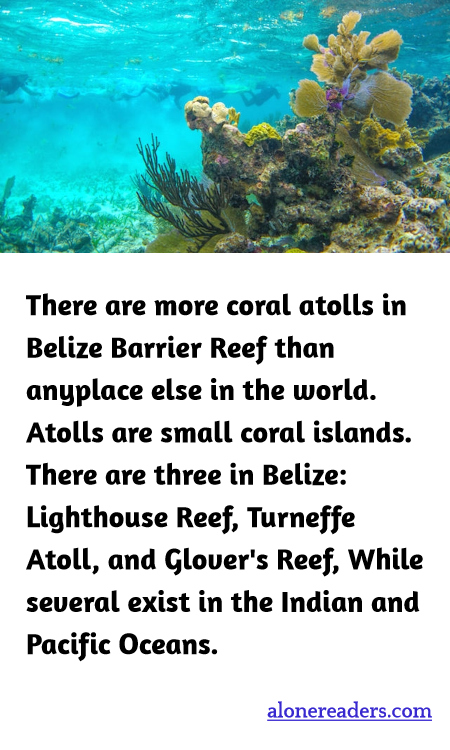
Belize's Barrier Reef stands out as a remarkable natural wonder, boasting more coral atolls than any other location on Earth. Coral atolls, often misunderstood, are actually ring-shaped coral reefs that encircle a lagoon partially or completely. They are formed from the growth of coral reefs on the rim of a submerged volcano. Over time, the central volcano sinks away, leaving behind just the growing coral atoll.
Among the notable atolls found within the Belize Barrier Reef are the Lighthouse Reef, Turneffe Atoll, and Glover's Reef. These atolls are biodiversity hotspots, harboring an abundance of marine life including various species of colorful fish, sea turtles, and manatees, among others. Glover's Reef is particularly acclaimed for its research station which has become a center for scientific study and conservation efforts.
The Belize Barrier Reef is the largest barrier reef system in the Northern Hemisphere and the second largest in the world, trailing only the Great Barrier Reef in Australia. It stretches approximately 220 miles from the tip of the Yucatan Peninsula down the eastern coast of Belize. This expansive reef system is not only a natural treasure but also a vital component of the local economy, supporting both the fishing industry and tourism through activities like snorkeling and scuba diving.
The remarkable abundance of coral atolls in this region contributes significantly to its ecological diversity. Each of these atolls plays a crucial role in providing habitats for various marine species. Moreover, the structure of atolls and their lagoons serves as natural barriers against storms, helping to protect the coastal regions of Belize from the impacts of hurricanes.
Preservation efforts are critical in sustaining the health of these atolls. Challenges such as climate change, ocean acidification, and human activity threaten their very existence. Rising temperatures can lead to coral bleaching, a phenomenon that damages coral reefs, and excessive carbon dioxide in the atmosphere results in ocean acidification, which impairs coral growth. To mitigate these impacts, conservation initiatives and sustainable practices are being encouraged not only in Belize but globally, focusing on protecting these unique ecosystems for future generations.
In summary, the coral atolls of the Belize Barrier Reef are not only a testament to the unique geological processes of our planet but also a crucial part of both the marine biodiversity and the socio-economic fabric of the region. Their protection is not an option but a necessity. The efforts made to preserve these natural wonders will play a decisive role in the overall health of our global oceanic systems.