More About This Card
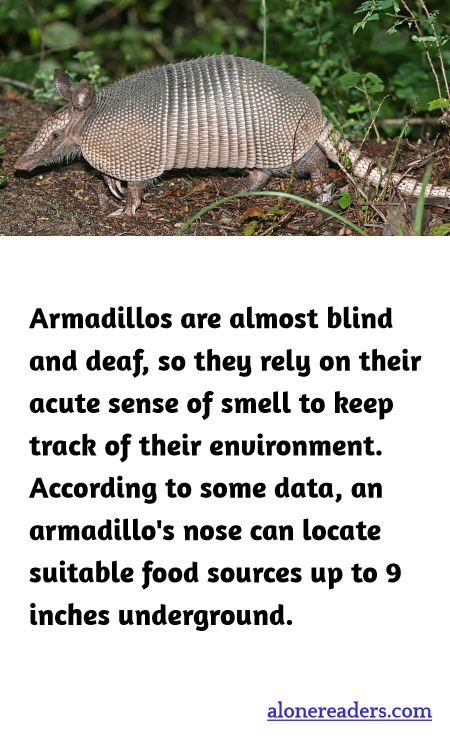
Armadillos, the armored mammals primarily found throughout the Americas, rely heavily on their keen sense of smell due to their limited vision and hearing abilities. Their eyesight is poor, which is somewhat unusual for a mammal, and they have very basic auditory senses. This sensory setup might seem like a disadvantage, but armadillos compensate impressively with their olfactory abilities.
The sense of smell of an armadillo is remarkably acute, enabling them to detect food sources beneath the surface of the ground—sometimes up to 9 inches deep. This is particularly useful since their diet mainly consists of insects, grubs, and other invertebrates which live in the soil. Their long, sticky tongues are perfectly adapted to quickly snap up these creatures once they've been uncovered.
Moreover, this powerful sense of smell also helps armadillos in other critical aspects of survival. It aids in locating mates during the breeding season, sensing predators, and even finding their way back to their burrows after foraging for food. Females also use their sense of smell to keep track of their young, which is vital for the newborns' survival.
This reliance on a highly developed sense of smell over sight or sound is an excellent example of how evolution can shape the sensory organs and abilities of an animal based on its ecological needs and environmental pressures. For armadillos, while they might not enjoy the vivid visual details of their surroundings or the sounds of their ecosystem, they are well-equipped to navigate and thrive in their unique niche in the animal kingdom.