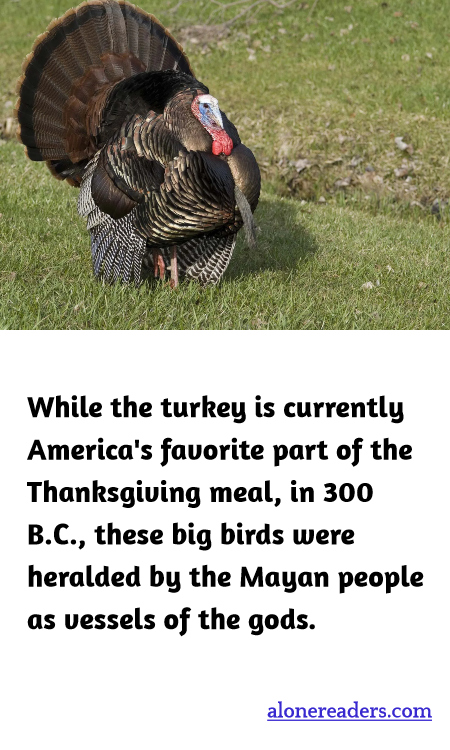
More About This Card
The turkey, a centerpiece of modern Thanksgiving feasts across America, carries a history that stretches back centuries to the ancient cultures of the Americas, long before it became associated with this holiday. Around 300 B.C., the significance of turkeys was deeply woven into the fabric of Mayan society, far beyond their role as a food source. These birds were considered sacred across several Mesoamerican cultures, including the Mayans, who believed turkeys were more than just earthly beings.
For the Mayans, turkeys were seen as vessels of the gods, embodying spiritual significance and used not just in culinary but also in ceremonial contexts. They were often depicted in religious and cultural artifacts, highlighting their importance in various rituals and beliefs. The feathers of turkeys were particularly valued, used in elaborate costumes and headdresses during rituals to honor the gods. These practices point to a profound reverence for the turkey, a stark contrast to the primarily culinary view held by many today during Thanksgiving.
The transition of the turkey from a sacred bird to a staple of the Thanksgiving meal reflects broader changes in society and culture over millennia. When Europeans arrived in the New World, they encountered a bird that was integral to the diet of Native American tribes. The turkey was one of the wild foods found in abundance, which made it an ideal choice for sustenance. As settlers adopted the turkey into their own food traditions, its spiritual significance waned, replaced by its role as sustenance.
Today, as families across the United States gather around the Thanksgiving table, few may be aware of the turkey’s ancient legacy as a vessel of the gods. Yet, understanding this history enriches the appreciation of the holiday, tying present celebrations to the rich tapestry of human culture that dates back thousands of years. It’s a testament to how traditions evolve and how elements of different cultures can become embedded in the practices of others, creating new meanings and significance over time. Thus, as we enjoy our Thanksgiving turkey, we partake in a tradition that is as old as civilization itself, bridging continents and cultures across the span of time.