More About This Card
The Avengers have become a global phenomenon, largely due to the massively successful film franchise that has captivated audiences worldwide. Known for their dynamic characters and high-stakes action, the Avengers movies have not only smashed box office records but have also created a sprawling, interconnected cinematic universe that has redefined the superhero genre. Characters like Iron Man, Captain America, Thor, and the Hulk have become household names, bringing together fans across generations and geographies.
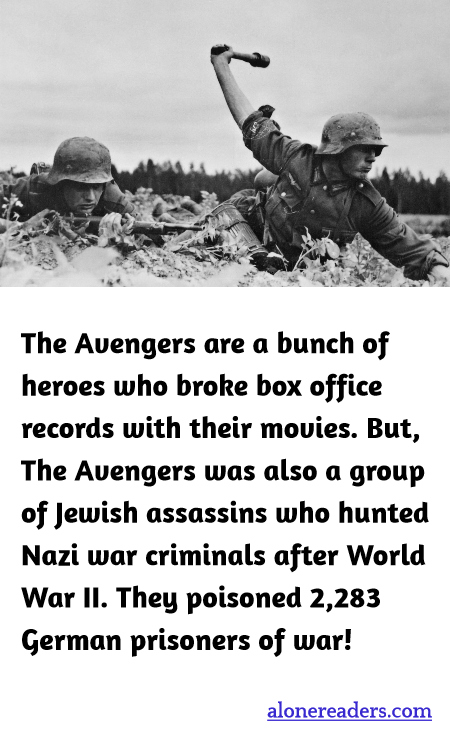
However, unbeknownst to many, there exists another group historically referred to as "The Avengers," but with a vastly different mission. This group was a band of Jewish partisans during and after World War II who called themselves “Nokmim” (Avengers), committed to seeking retribution against Nazis who had perpetrated the Holocaust. Led by figures such as Abba Kovner and Vitka Kempner, this group of Holocaust survivors took it upon themselves to exact revenge, representing a darker, more complex response to the unimaginable atrocities they and millions of others suffered.
One of their most controversial actions was the attempted poisoning in 1946 of a water supply at the Stalag 13 camp in Langwasser, Nuremberg, intended to kill a large number of German POWs as retribution for the crimes committed against the Jewish people. Although the full extent of their plans was ultimately not achieved, and the actual outcomes of their actions are still debated, the story of the Nokmim challenges the conventional narratives of post-war justice. Unlike the fictional superhero Avengers, who bring villains to justice while largely operating within a moral and legal framework, these historical Avengers operated in the chaotic aftermath of war, driven by a profound sense of personal injury and the failure of international justice to adequately address the horrors of the Holocaust.
These two very different uses of the name "The Avengers" highlight a fascinating dichotomy—one group represents a modern cultural iconography of heroism and justice within a fantastical framework, while the other underscores a real-world response to historical trauma and the complexities of vengeance versus justice. Each narrative offers its own insights into the human condition: one through the lens of entertainment and idealism, the other as a grim reminder of the consequences of human cruelty and the lengths to which individuals will go to address perceived injustices.