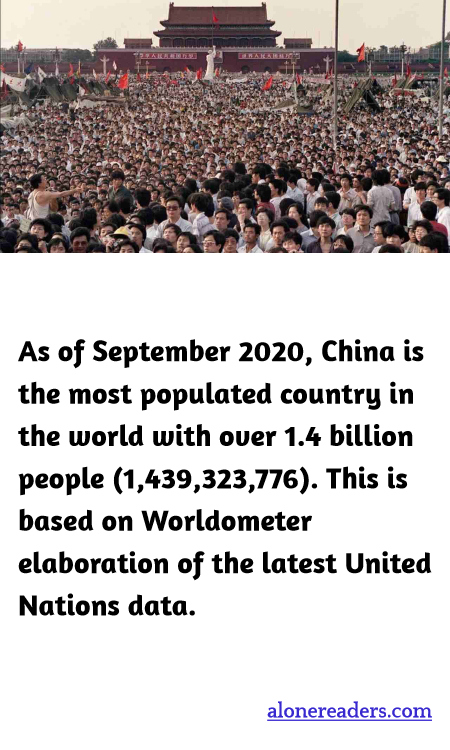
China, with its vast population surpassing 1.4 billion as reported in September 2020, stands as the most populated country on the globe. This statistic, which emerges from Worldometer's analysis of the latest United Nations data, underscores the massive scale of human diversity and demographic challenges within the nation. The implications of such a large population are profound, influencing economic, social, and environmental sectors.
Economically, this enormous population provides China with a substantial workforce, driving its position as a global manufacturing powerhouse and a leading player in various industrial sectors. This demographic advantage also presents significant challenges, including employment inequality, resource allocation, and ensuring sustainable economic growth that can keep pace with population growth.
Socially, the impacts are equally significant. The Chinese government and its policies have had to adapt continually to address issues such as urbanization, healthcare, education, and social security. The one-child policy, which was enforced until 2015, was a direct response to control the booming population. Its recent reversal, allowing families to have two children, reflects new social and economic pressures, such as an aging population and a shrinking workforce.
From an environmental viewpoint, supporting a population of such magnitude also leads to considerable challenges. High population density areas, particularly in urban environments like Beijing and Shanghai, grapple with issues such as air pollution, waste management, and water scarcity. The need for sustainable practices and renewable energy investments becomes increasingly critical as the nation progresses.
China's demographic prominence not only defines its domestic policy but also its international relations. As the world's population center, China's cultural, political, and economic movements have a significant ripple effect across global affairs.
Understanding and addressing the implications of such a large population is crucial for China's continued growth and stability. It is a delicate balance between leveraging the immense potential of its human resources and mitigating the systemic pressures that arise from such a populous nation. As China continues to evolve, the world watches closely to see how it manages these challenges and opportunities in the forthcoming decades.
