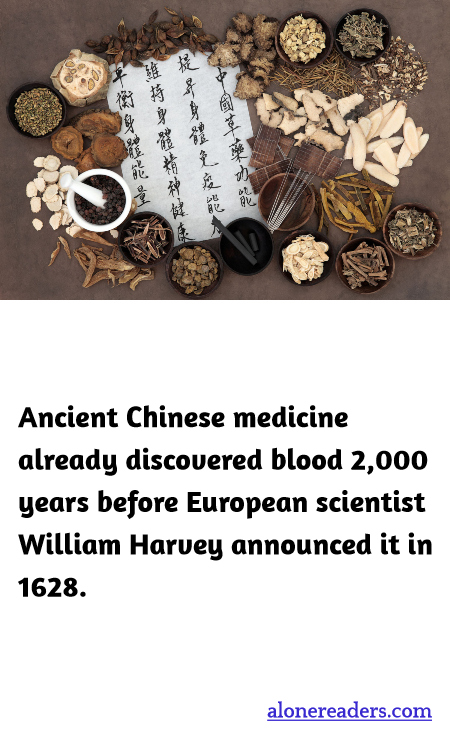
Ancient Chinese medicine, with its deep philosophical roots and meticulous observations of human physiology, was far ahead of its time in many aspects, particularly in the study of blood circulation. The concept of blood circulation, which was not formally recognized in the West until William Harvey's description in 1628, had been contemplated and documented by Chinese physicians thousands of years earlier.
Traditional Chinese medicine (TCM) introduced the idea of blood circulation through the concept of "Qi," an essential life force that flows through pathways known as meridians in the human body. According to these ancient texts, Qi and blood interact closely, and effective circulation of both is crucial for maintaining health and vitality. The Yellow Emperor's Classic of Medicine, a Chinese text dated around the 2nd century BCE, describes in detail the theories of blood circulation and its significance in ensuring the well-being of different organs.
Chinese practitioners developed a sophisticated understanding of how the blood circulates through the body based on their studies of pulse reading and the impact of herbal medicines on blood properties. For instance, they recognized that the heart was a central organ in blood circulation, similar to later Western discoveries, although their interpretation included more spiritual and holistic components.
Moreover, TCM's diagnostic techniques, such as pulse diagnosis, relied heavily on the concept of blood flow to assess the state of health in a patient. Through feeling the quality, rhythm, and speed of the blood pulse at various points on the body, a practitioner could diagnose illnesses and determine the health of the patient's Qi and blood.
These practices and theories show that the ancients had a nuanced approach to understanding bodily functions that arguably pre-empted Western discoveries by millennia. Although the details and methods differ considerably from the mechanistic explanations provided by the likes of William Harvey, the fundamental concept of a systemic circulation of a vital bodily fluid was present in China long before it was accepted in the Western world.
In conclusion, ancient Chinese medicine provided a comprehensive framework for understanding blood circulation, which contrasts and complements the later anatomical and physiological findings in Europe. The depth of ancient Chinese knowledge in medicine is a testament to their extensive observation and sophisticated theoretical development, highlighting a vibrant history of scientific inquiry long before modern conventions.
