More About This Card
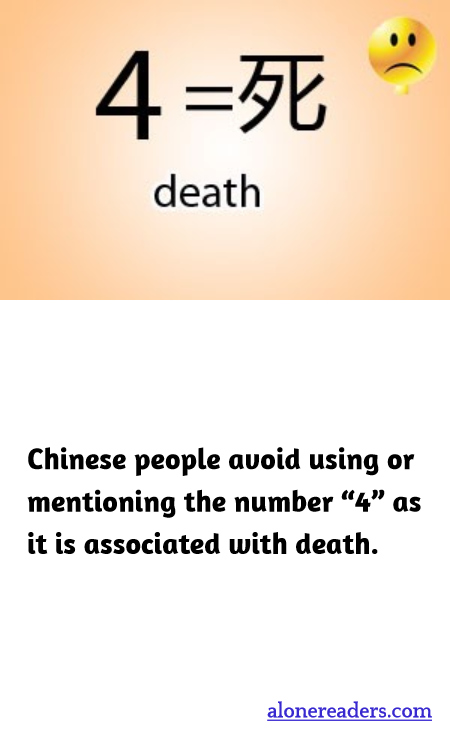
In Chinese culture, the number four is traditionally avoided due to its association with bad luck and death. This superstition stems from the fact that the pronunciation of the number four, "sì," sounds eerily similar to the word for death, "si," in Mandarin. Due to this phonetic likeness, many people in China and other parts of East Asia where cultural beliefs intersect, such as Taiwan, Singapore, and regions of Japan, go to great lengths to avoid the number.
This aversion manifests in various aspects of daily life and cultural practice. For instance, it is not uncommon for buildings, including hospitals and high-rises, to lack floors that are numbered 4. Similarly, apartment numbers, vehicle license plates, and phone numbers that include the digit 4 are often avoided or changed. During auspicious occasions such as weddings or during festivals, the number four is meticulously avoided to keep away bad luck.
Business practices also reflect this superstition. Many companies avoid using the number in product names, model numbers, or marketing materials, especially if their target market includes Chinese consumers. Similarly, when gifting, items grouped in fours are avoided, as they could be seen as a sign of bad will or even a veiled death wish.
Interestingly, this cultural nuance has impacted the real estate market as well. Properties on the fourth floor or with the number four in the address can sometimes sell for less than similar properties without the digit. Real estate developers catering to Chinese clients often skip not just the fourth floor but any floors containing the number four, like 14, 24, etc.
While younger generations and people in more cosmopolitan areas might not hold these beliefs as stringently, the avoidance of the number four still pervades many aspects of life, demonstrating the strong hold of tradition and superstition in Chinese culture. This cultural peculiarity serves as a reminder of the profound influence of language and belief systems in shaping everyday practices and social customs.