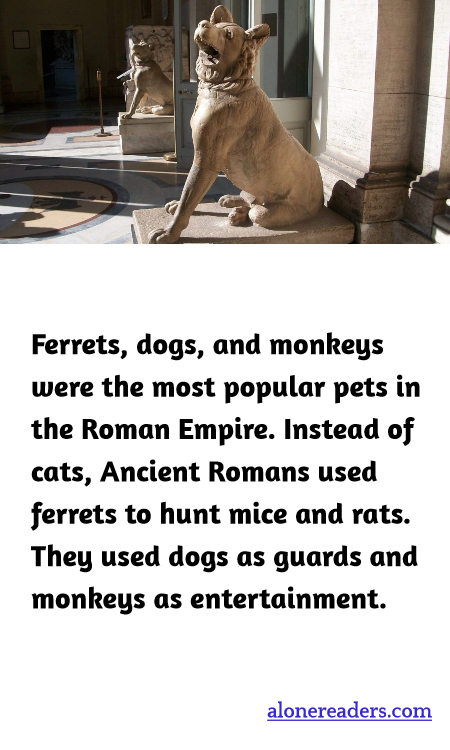
In the complex social and domestic life of the Roman Empire, an array of animals played vital roles, with ferrets, dogs, and monkeys standing out among the most favored pets of the era. Contrary to the trend in other ancient civilizations that revered cats for their pest control prowess, the Romans preferred employing ferrets for this task. Ferrets, with their slender, elongated bodies, were especially effective in chasing rodents out of their burrows and ensuring grain stores remained free from pests. This practical use combined with their playful and inquisitive nature likely elevated their status among Roman households.
Dogs, as in many other cultures, were cherished in Roman society primarily for their abilities as guard animals. Their loyalty and protective instincts made them ideal for guarding homes and properties. Historical accounts and artifacts, such as mosaics and sculptures, depict various breeds, suggesting that Romans appreciated a range of characteristics from their canine companions. Dogs were not only protectors but also symbols of status and even participants in some of the recreational activities like hunting.
Monkeys, meanwhile, added an exotic flair to Roman domestic life. They were often kept as symbols of wealth and status rather than for any utilitarian purpose. Sourced from distant lands, these creatures were novelties that provided entertainment in Roman courts and homes. Their playful antics and human-like behaviors made them intriguing and amusing companions, featured prominently in Roman art and literature.
The integration of these animals into daily life underscores the Romans' appreciation for the natural world and their practical needs for managing their environment. Each animal served a unique role that, when combined, showcases a diverse and interdependent relationship between Romans and their pets. From pest control to home security, and even to luxury, the choice of pets in the Roman Empire reflects a rich tapestry of cultural values and social practices of the time. The implications of these choices also suggest a deep understanding of animal behaviors and their utility in a society that valued both function and form in their animal companions.
