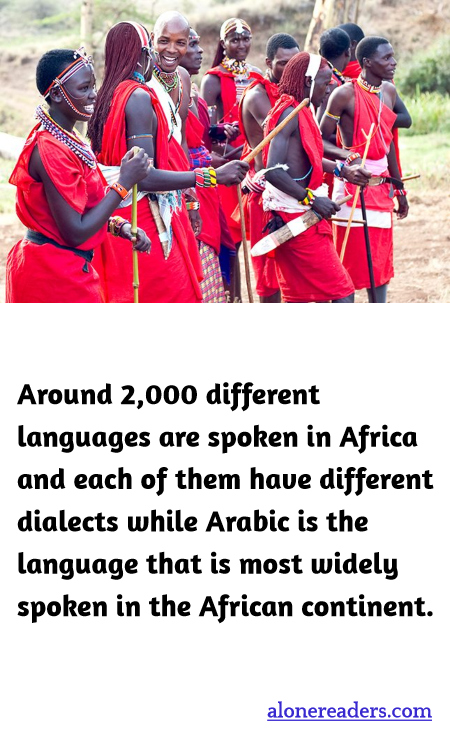
Africa is a continent rich in diversity, not only in terms of its culture and people but also in the myriad languages spoken across its vast lands. With around 2,000 distinct languages, Africa is a vibrant tapestry of linguistic diversity, each language offering a unique lens through which to understand its people and cultures. These languages range from widely spoken languages like Swahili and Hausa to lesser-known tongues such as Taa, known as one of the languages with the most phonemes in the world.
Each of these languages often has several different dialects, further enriching the linguistic landscape of Africa. For instance, Swahili alone has multiple dialects, which can vary significantly from one region to another. This variation not only illustrates the dynamic nature of African languages but also the adaptability and diverse historical influences that have shaped them.
Amidst this linguistic diversity, Arabic emerges as the most widely spoken language on the continent. Arabic in Africa is primarily concentrated in the northern regions, encompassing countries like Egypt, Morocco, Algeria, Tunisia, and Sudan. The spread of Arabic in Africa is intricately linked to historical trade routes and the spread of Islam, which played a significant role in the cultural and linguistic shaping of the continent.
Arabic's dominance in these regions is a testament to the historical interactions and exchanges that have occurred over centuries. It serves not only as a lingua franca in many African countries but also as a critical language for trade, politics, and religious practices. Moreover, the influence of Arabic is evident in the adoption of the Arabic script in other African languages, such as Hausa and Swahili, which underscores the deep cultural and linguistic interconnections that transcend individual languages.
Understanding the linguistic diversity of Africa, from its multitude of languages and dialects to the widespread use of Arabic, is crucial for appreciating the continent's rich heritage and complex identity. This diversity, while presenting certain challenges in terms of language preservation and education, also highlights the unique cultural dynamics that characterize Africa. It stresses the importance of continued linguistic research and preservation efforts to sustain these languages for future generations, thereby maintaining the cultural richness and historical depth they embody.
