More About This Card
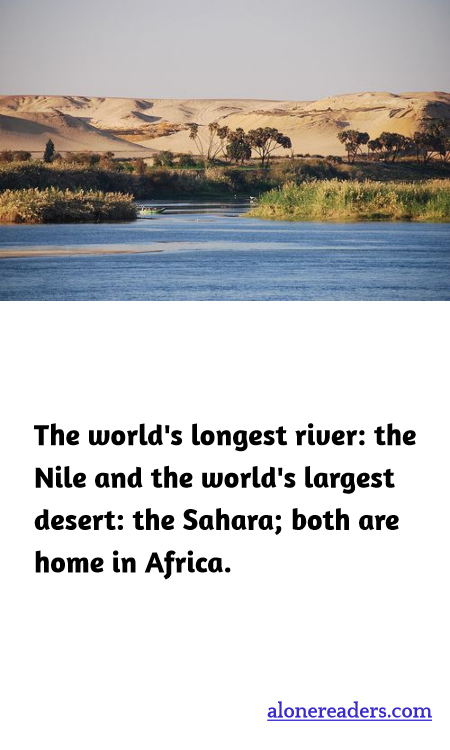
Africa, a continent bursting with extremes, is home to both the world's longest river, the Nile, and the largest desert, the Sahara. This juxtaposition of flowing water and arid land paints a complex tapestry of ecological and cultural landscapes across Africa.
The Nile River, stretching about 6,650 kilometers (4,130 miles), is an awe-inspiring stream of life that winds through eleven countries before flowing into the Mediterranean Sea. Its basin is a lifeline for millions of people who depend on it for agriculture, fishing, and as a vital water source. Historically, the Nile was integral to the development of Egyptian Civilization, fostering farming in a region that could have otherwise been barren. Every year, the river flooded, depositing nutrient-rich silt onto its banks, enabling ancient Egyptians to grow crops. This annual flooding was so crucial that it was revered in local mythology and determined much of the agricultural calendar.
Contrasting dramatically with the lush riverbanks of the Nile is the Sahara Desert, another African marvel that stretches over 9 million square kilometers (about 3.5 million square miles). The Sahara covers much of North Africa, enveloping several countries, including Egypt, Sudan, Libya, Algeria, and Morocco. Known for its harsh environment, the desert features some of the most extreme temperatures and scant rainfall, making it one of the most inhospitable places on Earth. Yet, it is not devoid of life; nomadic tribes such as the Tuareg have navigated this severe landscape for centuries, finding ways to survive by setting up temporary settlements and relying on trade and knowledge of scarce water sources.
The Sahara is also famous for its stunning landscapes, including vast sand dunes, rock formations, and even mountains. Despite its dry, barren image, it is a place of incredible beauty and diversity. The desert is transforming over time, with areas on the edges experiencing changes in rainfall patterns due to climate change, leading to greening in some parts and increased desertification in others.
This stark contrast between the nurturing blue waters of the Nile and the challenging vast sands of the Sahara not only highlights Africa’s geographical diversity but also its adaptability. Both the river and the desert have shaped the cultures and lifestyles of the people surrounding them, influencing everything from ancient civilizations to modern-day industries and environmental management. Exploring these two extremes provides insight into the resilience and ingenuity of human societies in adapting to their environments, making Africa a unique study in contrasts and continuities.