More About This Card
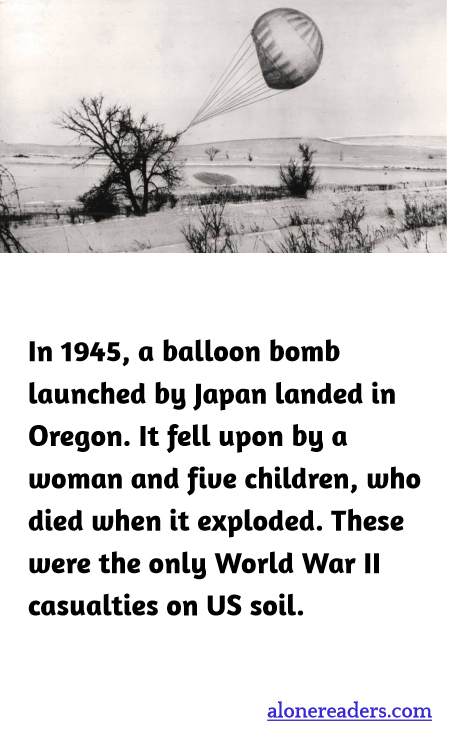
In the spring of 1945, during the final stages of World War II, a tragic and relatively unknown event unfolded on U.S. soil, specifically in Oregon. Japan, in a unique and desperate military strategy, launched thousands of balloon bombs aimed at North America. These weapons, known as Fu-Go, were intended to cause damage and spread fear among the American populace. Constructed from lightweight paper and silk, these incendiary devices were carried across the Pacific Ocean by the jet stream, a method that marked one of the first uses of intercontinental weapon delivery systems.
The mechanism was simple yet ingenious: the balloons were designed to release their bombs once they lost altitude after crossing the ocean. However, their path and landing points were largely uncontrolled and unpredictable. By May of that year, one of these balloon bombs had a lethal encounter in Oregon. A group consisting of a pregnant woman, Elsie Mitchell, and five children—Eddie Engen, Jay Gifford, Joan Patzke, Dick Patzke, and Sherman Shoemaker—came across one of these devices during a church picnic near Bly, Oregon. Unaware of the deadly nature of their discovery, the group approached the balloon, which exploded, killing all six individuals instantly.
This tragic incident marked the only wartime fatalities on the continental United States directly attributed to enemy action during World War II, highlighting not only the reach but the unpredictable consequences of war. The U.S. government initially suppressed news of the balloon bombs, fearing public panic and unwilling to let Japan know of their effectiveness. It wasn't until similar incidents occurred that the true nature and extent of the balloon bomb project were understood.
The deaths in Oregon serve as a poignant reminder of the random and indiscriminate nature of war, affecting not just armed combatants in distant battlefields but also civilians, including children, far from the front lines. The event is memorialized by a simple stone monument at the site where the bomb exploded in Bly, serving as a somber testament to a largely forgotten fragment of wartime history.