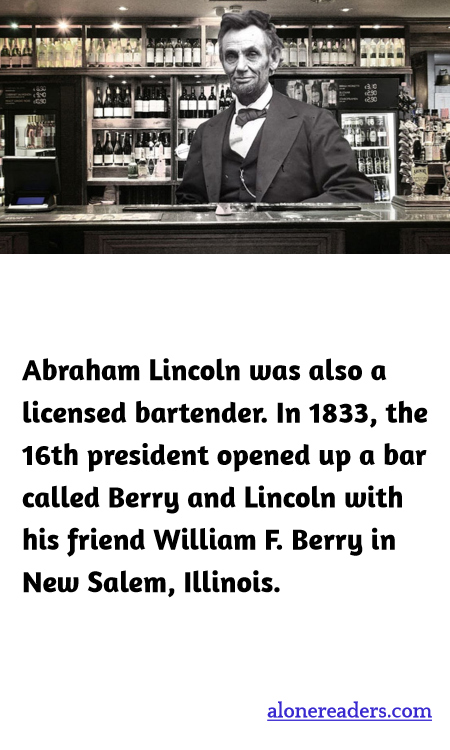
Before he was eternally etched into history as one of the most influential U.S. presidents, Abraham Lincoln was a man of many trades. Among these less known ventures is his stint as a licensed bartender. In 1833, several years before his political career took off, Lincoln and his friend William F. Berry took ownership of a tavern in New Salem, Illinois, which they named Berry and Lincoln.
Lincoln's involvement in the tavern was a brief but notable chapter in his varied early professional life, which also included working as a postmaster and surveyor. The establishment was situated along a well-traveled road, providing the partners with a steady flow of customers, from local villagers to weary travelers. According to historical records, Berry was the primary manager of the bar's operations, but Lincoln's role was substantial enough to warrant his obtaining a tavern license. This license authorized him to sell liquor by the quart, a common practice of the time.
This aspect of Lincoln's life provides a fascinating glimpse into his pre-presidential years, showcasing a side of him that isn't often highlighted in the mainstream narratives of his legacy. His time as a bartender and co-owner of Berry and Lincoln offers insights into his interpersonal skills, and his ability to connect with a variety of people — traits that would later prove essential throughout his political career.
However, Lincoln's endeavor into the tavern business was short-lived. The partnership ended when the two men accrued a debt that Berry primarily shouldered. Lincoln's departure from the bar scene marked his transition into more intellectual pursuits, ultimately guiding him towards law and politics. This chapter, though a small part of his life, underscores the varied human experiences that shaped his character and equipped him for the leadership he would eventually undertake as President during one of the most tumultuous times in American history.
Lincoln's journey from a tavern owner to the President reflects the unpredictable and multifaceted nature of his early life, highlighting that his path to prominence was far from linear. It is a reminder of how diverse experiences can contribute to a person's growth and capabilities, eventually preparing them for unexpected roles and challenges.
