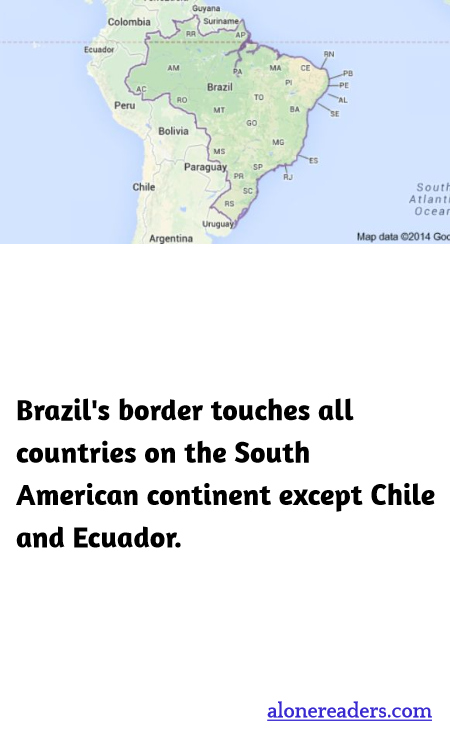
Brazil, the fifth largest country in the world and the largest in South America, boasts a geographic profile as vast as its cultural footprint. Covering an area of approximately 8.5 million square kilometers, it is renowned not only for its size but also for its diverse landscapes which range from the Amazon Rainforest to vast savannahs and bustling metropolises. One of the most intriguing aspects of Brazil's geography is its extensive border that touches almost every country on the continent.
Brazil shares its borders with nine out of the eleven countries in South America, making it the country with the most neighbors on the continent. It is bordered by French Guiana, Suriname, Guyana, Venezuela, and Colombia to the north; Peru and Bolivia to the west; Argentina and Paraguay to the southwest; and Uruguay to the south. This extensive network of borders plays a crucial role in Brazil's geopolitical and cultural exchanges with its neighbors, contributing to a vibrant blend of cultural influences that are evident in Brazil's music, cuisine, and festivals.
Interestingly, the only two South American countries that do not share a border with Brazil are Chile and Ecuador. This is primarily due to the natural barriers that separate them. The Andes Mountains, which stretch along the western edge of South America, act as a formidable barrier between Brazil and Chile. Meanwhile, Ecuador, although relatively close, is separated from Brazil by Peru and Colombia.
The fact that Brazil is linked with so many neighbors has significant implications for its economic, social, and environmental policies. For instance, the Amazon Rainforest, which spans several countries including Brazil, plays a crucial role in the continent's ecology and climate. The preservation of the Amazon and its immense biodiversity is not only a Brazilian concern but a continental and global one, involving cooperative efforts from all nations that share this invaluable resource.
Moreover, Brazil's shared borders facilitate trade and movement among South American countries, fostering economic ties and allowing for a dynamic exchange of goods and culture. These interactions contribute to the socio-economic development of the region, strengthening bonds among the nations.
In conclusion, Brazil's geographical setup with borders touching the majority of South American countries, except Chile and Ecuador, deeply influences its foreign relations, trade, and cultural exchanges, building a foundation for regional cooperation. Furthermore, it highlights the importance of understanding geographic and environmental dynamics for better continental collaboration and conservation efforts.
