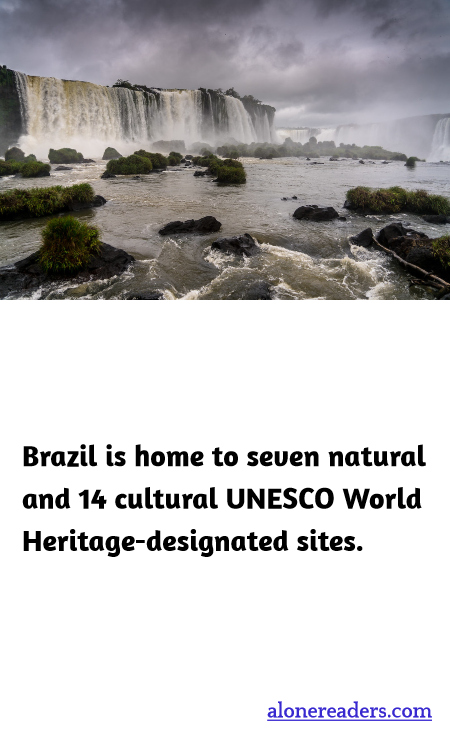
Brazil, a country celebrated for its vibrant culture and breathtaking landscapes, boasts a rich tapestry of UNESCO World Heritage-designated sites, making it a premier destination for both cultural connoisseurs and nature enthusiasts. Among these, seven are natural sites, revealing the country's commitment to preserving its extraordinary biodiversity and unique ecosystems. These include the Amazon Rainforest, recognized as the largest and most biodiverse tract of tropical rainforest in the world, and the Pantanal, the world’s largest tropical wetland area. Both of these sites offer unparalleled opportunities for wildlife observation and are crucial for global ecological balance.
The Atlantic Forest South-East Reserves and the Cerrado Protected Areas: Chapada dos Veadeiros and Emas National Parks illustrate the diverse flora and fauna endemic to Brazil. The Iguaçu National Park, home to the spectacular Iguaçu Waterfalls, is another gem that underscores the natural beauty the country holds. The discovery and ongoing research in the Central Amazon Conservation Complex and the Brazilian Atlantic Islands: Fernando de Noronha and Atol das Rocas Reserves provide critical insights into marine and terrestrial biodiversity.
On the cultural front, Brazil's 14 UNESCO sites include the historic town of Ouro Preto, the old city of Salvador de Bahia, and the Brasilia’s architectural landscape, which showcases the genius of modernist architect Oscar Niemeyer. Each cultural site serves as a custodian of the stories, traditions, and architectural innovations that have shaped the nation. The São Francisco Square in the town of São Cristóvão is a testament to the blend of cultures that have influenced Brazilian heritage, while the Pampulha Modern Ensemble showcases the innovative use of concrete, a hallmark of modern architecture.
These cultural sites are not only educational but they are also a mirror reflecting the societal changes and historical evolution of Brazil. They encapsulate the Portuguese influence, the indigenous heritage, and the Afro-Brazilian impact, which has given Brazil its distinctive identity. The inclusion of sites like Valongo Wharf Archaeological Site in Rio de Janeiro, where thousands of enslaved Africans first reached Brazil, emphasizes the UNESCO’s commitment to preserving sites of conscience which are pivotal for understanding the past and shaping future dialogues about human rights and dignity.
Together, Brazil’s UNESCO sites offer a kaleidoscope of experiences that underscore its ecological splendor and cultural richness. For adventurers and historians alike, a journey through these sites is not just a lesson in history or ecology, but a deep, immersive dive into the heart and soul of Brazilian heritage. These locations, each with their unique narrative and natural beauty, collectively make Brazil an endlessly fascinating country, rich with lessons of conservation, resilience, and cultural intermingling.
