More About This Card
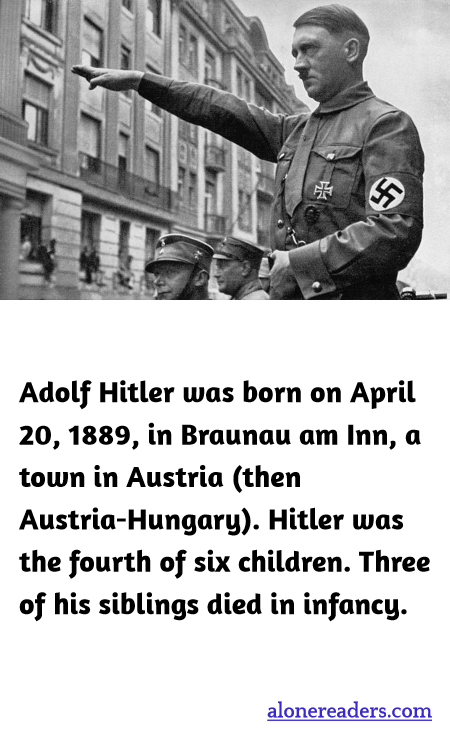
Adolf Hitler's early years were marked by turmoil and loss, shaping the man he would eventually become. Born in the small Austrian town of Braunau am Inn, part of the Austro-Hungarian Empire, Hitler's family was not uncommon in experiencing the hardships and health challenges of the early 20th century. His father, Alois Hitler, was a senior customs official, a stern and, by many accounts, strict personality who ruled his family with authoritarian discipline. His mother, Klara Pölzl, was Alois’ third wife and a much gentler presence, offering Adolf a more nurturing relationship during his formative years.
Despite the nurturing environment his mother provided, the early deaths of his siblings might have contributed to Hitler's understanding of the fragility of life, a theme that emerged in his later ideological constructs. Losing siblings could evoke a sense of vulnerability or a need to control, aspects later mirrored in Hitler's political life where he sought absolute control over Germany and its narrative.
Furthermore, Hitler’s academic life did not hint at his future path; initially, he was a decent student, but his performance dropped dramatically after his family moved to Linz. It was here that he first expressed ambitions to become an artist, a dream that would be crushed with his repeated rejections from the Vienna Academy of Fine Arts. These rejections, coupled with his subsequent years in poverty in Vienna, may have played a critical role in the formulation of his ideology. During this period, Hitler developed a worldview intertwined with xenophobia, a disdain for democracy, and anti-Semitic leanings, influenced by the political and social movements in Vienna at the time.
This mixture of personal trauma, early losses, and ideological formation during his formative years in Vienna set Hitler on a path toward dictatorial tyranny. Understanding his early life provides a context to the complexities behind his rise to power, illustrating how personal experiences can intertwine with broader historical currents to shape a future that had a profound impact both on Germany and the world.