More About This Card
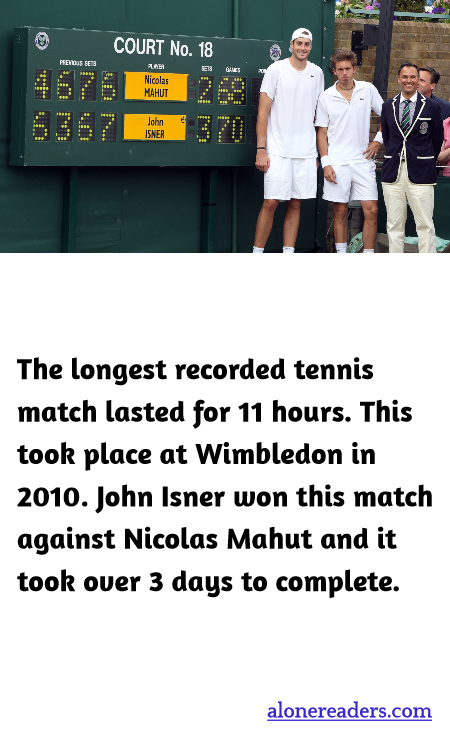
In the storied annals of tennis, few matches have captured the imagination of the public and the reverence of sport enthusiasts as the marathon encounter between John Isner and Nicolas Mahut at Wimbledon 2010. This clash is not merely notable for its duration but for the extraordinary display of endurance, skill, and sportsmanship it highlighted. Spanning across three days, the match set the record for the longest tennis match ever played, clocking in at 11 hours over a grueling stretch.
The match, which was part of the first round of Wimbledon, began on June 22, 2010, and concluded on June 24, 2010. It was played on Court 18, which has since become famous due to this historic occasion. The final score read 6–4, 3–6, 6–7(7), 7–6(3), 70–68 in favor of the American, John Isner. The fifth set alone is a legend in itself, lasting 8 hours and 11 minutes, longer than the previous longest recorded match.
The numbers involved in the match are staggering: Isner served a record 113 aces, while Mahut served 103 aces, with a total of 980 points played. But beyond the statistics, the match was a profound testament to human resilience and determination. Both players pushed themselves to physical and mental limits, with each point fiercely contested, and the momentum swinging like a pendulum.
Despite its length and the sheer physicality of the endeavor, the match was characterized by an exemplary display of sportsmanship and respect between the two players, enhancing the ethos of tennis. The crowd at Wimbledon, and indeed around the world, watched in awe, with increasing admiration and empathy for the two gladiators.
The Isner-Mahut match became more than a game; it was a dramatic saga unfolding on the grass courts of Wimbledon. It tested not just the skill sets but also the human spirit of the players. When Isner finally won, it was a moment of relief mixed with triumph and exhaustion. Both athletes were commended globally for their perseverance and commitment.
This record-breaking match left an indelible mark on Wimbledon and tennis history. It prompted discussions on potential rule changes, highlighting concerns about the physical toll such extended play takes on athletes. In the years since, Wimbledon has introduced a rule where a final set tiebreak is played if the score reaches 12-12, a direct nod to preventing such marathons. Yet, the Isner-Mahut match remains a symbol of tireless passion and an example of what it truly means to give your all on the court.