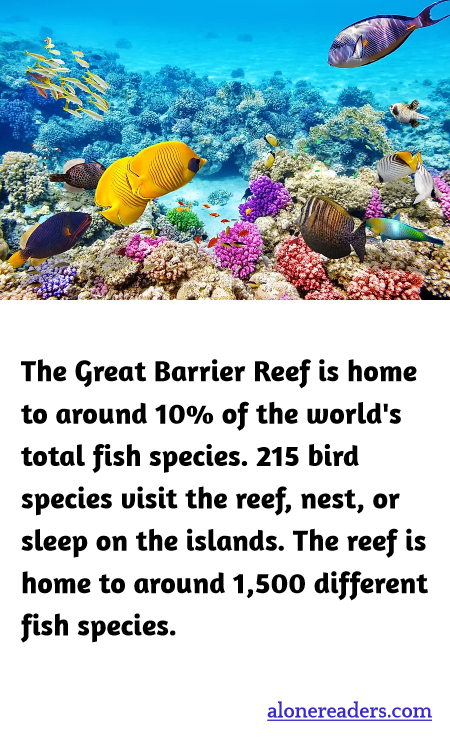
The Great Barrier Reef, a magnificent natural wonder located off the coast of Queensland, Australia, is one of the world's most vibrant marine ecosystems. Covering over 344,400 square kilometers, it is not only the largest coral reef system in the world but also one of the most biodiverse areas on the planet. The reef plays host to about 10% of the world's total fish species, underscoring its critical role in marine ecology.
Among its colorful corridors, approximately 1,500 different species of fish can be found. These range from tiny, vividly colored damselfish to larger species such as the majestic manta rays and even predatory sharks. This diversity is crucial for the balance of the reef's ecosystem, making it a vital habitat that supports a complex food web essential for the survival of many species.
Birdlife is equally prolific at the Great Barrier Reef, with 215 known bird species utilizing the area for nesting, resting, or foraging. These birds depend on the reef for food and as a breeding ground. Islands scattered around the reef system provide critical nesting sites for species such as the white-bellied sea eagle and the roseate tern, making the reef an important avian biodiversity hotspot as well.
The symbiotic relationships between species within the reef, such as that between clownfish and anemones, and the importance of mangrove forests and seagrass beds surrounding the reef, provide additional layers of ecological interactions that enhance the biodiversity of this region. Unfortunately, the Great Barrier Reef faces significant threats from climate change, water pollution, and physical disturbances such as coastal development and illegal fishing activities.
Efforts to conserve and protect this indispensable marine environment are ongoing and involve a combination of scientific research, protected area management, and sustainable tourism practices. There is an ever-growing emphasis on global cooperation and community engagement to ensure that the future of the reef, and the myriad of species that call it home, is secured against the burgeoning threats of modernity, making it a quintessential example of the delicate interplay between natural beauty and conservation challenges.
