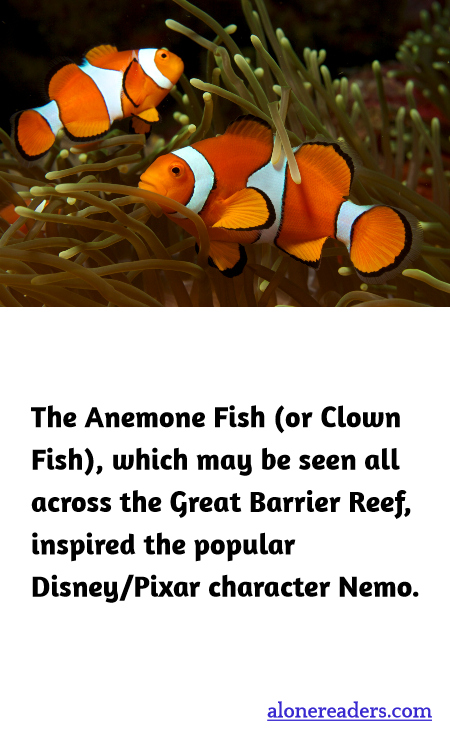
The anemone fish, more popularly known as the clownfish, gained worldwide fame through the beloved Disney/Pixar character Nemo. These vibrant and enchanting creatures are native to the warm waters of the Indo-Pacific but are notably prevalent around the Great Barrier Reef. Known for their striking orange coloration marked with white bands, clownfish have a symbiotic relationship with sea anemones, which is a primary aspect of their ecological interaction.
Clownfish make their homes among the venomous tendrils of the sea anemone. In a mutualistic partnership, the clownfish are protected from predators by the anemone’s harmful stings, to which they are immune, while the fish's movement promotes water circulation for the anemone, enhancing its oxygen supply. Additionally, clownfish help keep the anemone clean and provide nutrients in the form of waste. This unique arrangement showcases a remarkable adaptation to their environment.
Interestingly, all clownfish are born male; however, they have the ability to switch their sex, often to become the dominant female of their group, usually in response to the hierarchical dynamics of their community. This fascinating aspect of their biology invites a plethora of scientific curiosity regarding the mechanisms and hormonal interactions that trigger such transformations.
Their role within the marine ecosystem extends beyond their individual survival. As part of larger food webs, clownfish contribute to the nutrient cycles of coral reefs. Their activities assist in the health and sustainability of coral reefs, which are vital marine environments known for their biological diversity. The Great Barrier Reef, for instance, is a hub that supports a multitude of marine species, offering them habitat, feeding grounds, and breeding areas.
Despite their appeal and robustness, clownfish are not entirely free from threats. Pollution, habitat loss, and the impacts of climate change, such as ocean acidification and rising sea temperatures, pose significant challenges. Additionally, their fame, ironically, has led to increased demand in the ornamental fish trade, which can lead to unsustainable fishing practices if not regulated appropriately.
Advocacy for marine conservation and responsible reef management practices are crucial to ensuring that populations of clownfish, along with their anemone partners and coral reef habitats, continue to thrive. This would allow future generations to also enjoy and learn from these colorful and compelling characters of the sea. Indeed, the real-world "Nemos" embody a story of coexistence and resilience, enhancing our appreciation for the complexity and beauty of marine life.
