More About This Card
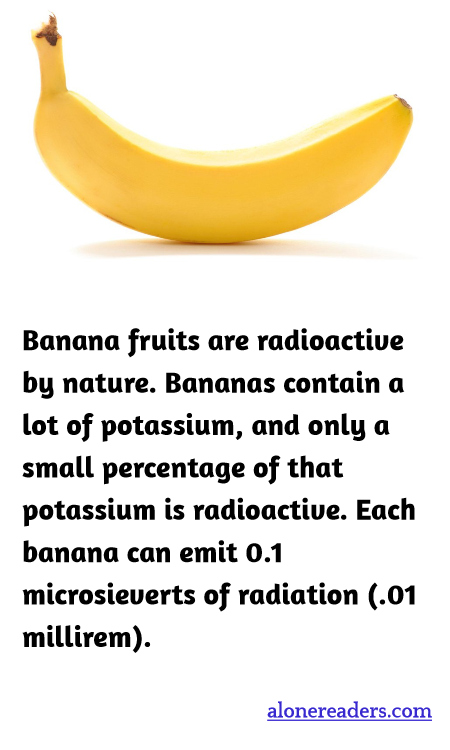
Bananas are one of the most popular fruits worldwide, known not only for their nutritional benefits but also for an intriguing characteristic: they are naturally radioactive. This radioactivity stems from their potassium content. Potassium is an essential mineral that is crucial for proper body functions, including regulating heart function and playing a key role in skeletal and smooth muscle contraction, making it vital for normal digestive and muscular function.
While potassium is beneficial, a fraction of it is composed of the isotope potassium-40, a radioactive version of potassium. Potassium-40 is a naturally occurring isotope that is present in many foods we consume. However, due to the high levels of potassium in bananas, the radioactive presence becomes notable. The radioactivity of each banana is measured as 0.1 microsieverts of radiation, a very small amount when compared to the levels of exposure from other sources like medical imaging.
Despite the radioactive content, the level of radiation emitted by a banana is incredibly low. To put it in perspective, the amount of radiation from one banana is significantly less than the radiation one would be exposed to during a typical flight, a day in a city with high natural background radiation, or even just from normal bodily functions. The U.S. Environmental Protection Agency (EPA) considers exposure of up to 3,000 microsieverts per year as acceptable for members of the general public from controlled sources, demonstrating that the minute amount from bananas is not a health risk.
The phenomena of banana radiation is commonly referred to using the informal term "banana equivalent dose" (BED). This term was created to provide a simple scale through which the public could understand the levels of radiation they face every day in a relatable way. Essentially, by comparing radiation exposure to the number of bananas one would need to eat to reach that level, it helps demystify and destigmatize the everyday encounters with radiation.
In conclusion, while it is true that bananas are radioactive, the levels of radiation they emit are so low that they do not pose any harm to human health. The presence of potassium-40 in bananas and other foods highlights an interesting intersection of nutrition and radioactivity, an area where science meets everyday life. The significant health benefits of consuming bananas far outweigh the insignificant risk posed by their radiation levels, affirming them as a safe and nutritious choice for most diets.